LGBTQ+ travel guide
Córdoba for LGBTQ+ travelers
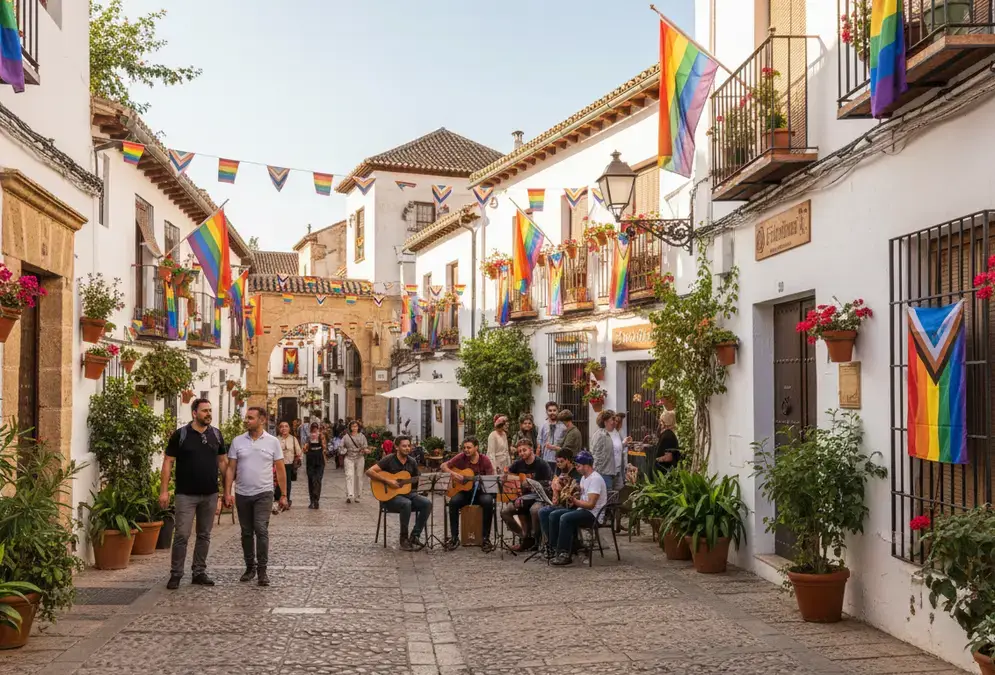
Spain legalised same-sex marriage in 2005. Córdoba, a city whose identity rests on centuries of coexistence between Moorish, Jewish and Christian cultures, carries that openness naturally. Gay bars near the Mezquita, COLEGAS based here since 1989, and a Pride march in late June: everything you need to plan your trip.

Written by
María Fernanda González Ten years covering Córdoba's UNESCO heritage sites, sourcing from Junta de Andalucía documentation.
Published
Updated
Spain legalised same-sex marriage in July 2005, one of the first countries in the world to do so. Two decades on, around 90% of Spaniards support LGBTQ+ equality, a figure that has held steady across polling for years. LGBTQ+ travel in Córdoba carries an extra dimension beyond national law: this is a city whose identity was built on three cultures (Moorish, Jewish and Christian) sharing the same streets for centuries. The Judería, the old synagogue, the mosque-cathedral: the physical evidence is still there. For many gay and queer visitors, that history adds real meaning to a trip.
The infrastructure on the ground is real too. COLEGAS, founded in Córdoba in 1989, is Spain's oldest LGBT confederation and still runs its office on Calle Duque de Hornachuelos. Pub Glam on Calle Miguel Gila draws a mixed, welcoming crowd from Wednesday through Saturday. Córdoba Pride takes place every June, organised by COLEGAS and allied groups, and grows a little larger each year. The city is compact enough that the bars, the Mezquita, and the best restaurant terraces are all within twenty minutes on foot.
This guide covers gay bars and nightlife in the Centro district, inclusive dining options, the Hammam Al Ándalus, LGBTQ+-welcoming hotels near the old city, Córdoba Pride dates, and practical tips on safety and getting around. Everything you need to plan a trip with confidence.
LGBTQ+ Córdoba at a glance
- Safety level
- Very high, widely welcoming city
- Pride month
- Late June (COLEGAS Córdoba)
- Gay-friendly area
- Centro district & Judería
- COLEGAS since
- 1989 (Spain's oldest LGBT confederation)
- Same-sex marriage
- Legal since July 2005
COLEGAS Córdoba: community resource
Spain's oldest LGBT confederation has its office at Calle Duque de Hornachuelos 12. Open for advice, events and community support. Visit colegas.lgbt for contact details and the full Pride calendar.
In this guide
Gay bars & nightlife
Córdoba's LGBTQ+ nightlife concentrates in the Centro district, a short walk from the Mezquita. The scene is intimate: venues know their regulars, the vibe is warm rather than anonymous, and nights rarely start before 10 pm.
Pub Glam
Córdoba's main LGBT barThe reference point for Córdoba's LGBTQ+ community. Pub Glam draws a mixed crowd (gay, lesbian, straight allies) in a relaxed and inclusive atmosphere. Creative cocktails, pop and dance music, and themed evenings throughout the year. Happy hour runs from 8 to 10 pm with 30% off cocktails.
C. Miguel Gila, Noroeste Wed–Sat 10 pm to 3–4 am 4.6/5 Google
Glam (Calle Alfaros)
LGBT nightclub with drag showsA dedicated LGBT nightclub on Calle de los Alfaros 29, known for drag performances featuring national-level artists. Open Friday and Saturday from 11 pm to 4 am. The most energetic option for a late night out in Córdoba.
Calle de los Alfaros, 29 Fri–Sat 11 pm–4 am
Glace Lounge Bar
Welcoming cocktail loungeA sophisticated cocktail bar with a lounge atmosphere, listed across several LGBTQ+ travel resources as a welcoming space. Jazz and electro-lounge music, a terrace on Calle Escultor Fernández Márquez, and an excellent Cosmopolitan. A quieter alternative to the club scene.
C. Escultor Fernández Márquez, 9 From 7 pm daily 4.7/5 Google
Tip: Córdoba's nightlife starts late. Bars fill up after 11 pm, clubs after midnight. In summer (July–August), some venues extend their hours; in winter the scene concentrates on weekends.
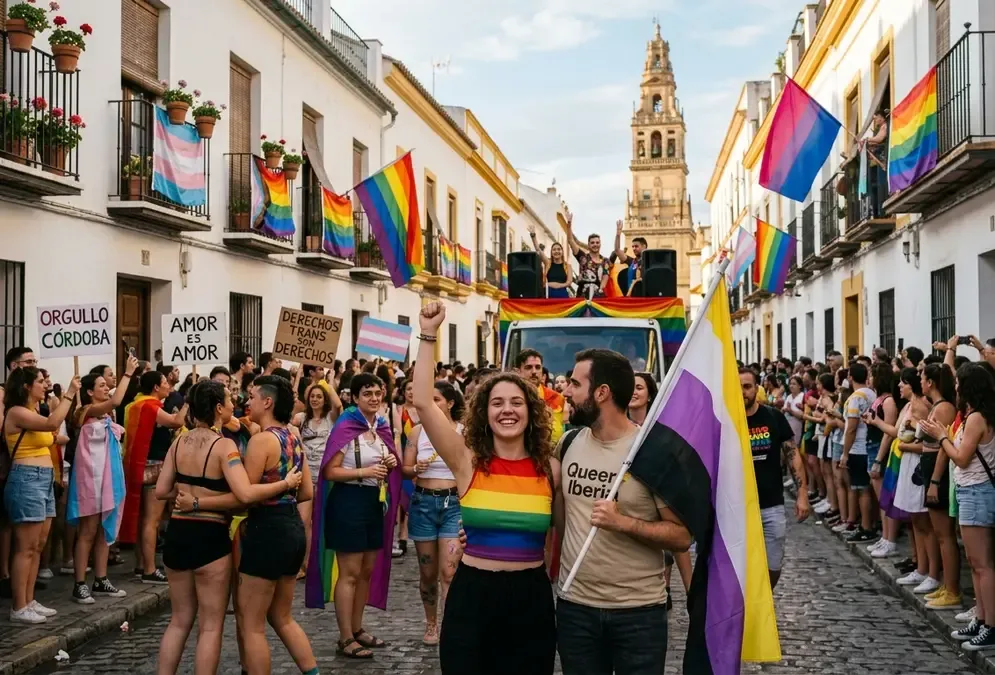
Córdoba's Pride march grows every year, and the city's spirit of coexistence finds its modern expression.
Inclusive dining
Córdoba's restaurant scene is broadly welcoming. Same-sex couples dine without issue at any establishment in the city. A handful of places, particularly the vegetarian and creative restaurants, have built a reputation for a particularly open and progressive atmosphere.
La Bicicleta
Vegetarian · Open all day
A favourite with Córdoba's young, open-minded crowd. La Bicicleta serves fresh vegetarian and vegan food (homemade juices, plant-based burgers, seasonal salads) in a relaxed setting with no siesta closure. The kind of place where everyone is welcome.
Cardenal González, 1
Amaltea
Vegetarian & vegan fine dining · Est. 1988
One of Córdoba's longest-running vegetarian restaurants, Amaltea has cultivated a loyal following among the city's progressive community. The interior mixes coloured tiles with warm wood; the menu covers vegetarian, vegan and gluten-free options with locally sourced ingredients. Dinner reservations recommended.
Ronda Isasa, 10
El Astronauta
Creative & eclectic · Cocktail bar
An eclectic café-restaurant with a creative menu and a laid-back, anything-goes atmosphere. Popular with students and the artistic crowd, El Astronauta is frequently mentioned in LGBT travel resources as a naturally welcoming space.
Worth knowing: Córdoba's restaurant culture is thoroughly inclusive. Public displays of affection between same-sex couples are entirely normal and attract no particular attention in the city's dining rooms and terraces.
Wellness & hammam
Córdoba's most celebrated wellness experience is its Arab baths, a fitting choice in a city where Islamic, Jewish and Christian traditions once shared the same streets.
Hammam Al Ándalus Arab Baths
Wellness · Mixed-gender bathingEurope's largest Arab baths, housed in a beautifully restored Caliphate building steps from the Mezquita. Temperature-graduated pools, steam room and oil massages in a serene, candlelit atmosphere. Sessions are mixed-gender, non-sexual wellness spaces: deeply relaxing and universally welcoming. Book ahead, especially for evening slots.
Corregidor Luis de la Cerda, 51 From €30
Where to stay
All hotels and guesthouses in Spain operate under national non-discrimination law. In practice, LGBTQ+ guests encounter no issues at any establishment in Córdoba. The most atmospheric (and historically resonant) area for a stay is the Judería, the medieval Jewish quarter whose streets embody the city's spirit of coexistence.
Las Casas de la Judería
4-star · Historic Jewish Quarter
A labyrinthine network of 18th-century mansions joined by underground passages. Andalusian patios, fountains and antique furnishings: staying here feels like inhabiting the city's history. Highly regarded by LGBTQ+ guests on international booking platforms.
La Llave de la Judería
Boutique · Judería · From €85
A smaller, more intimate option in the heart of the Jewish quarter. Twelve individually decorated rooms around a traditional patio. Warm, attentive service in a building that dates to the 16th century.
Cats Hostel
Hostel · Budget-friendly · Social atmosphere
For solo travellers and budget-conscious visitors, Cats Hostel offers a sociable base with a mixed international crowd. LGBTQ+ guests report feeling at ease in its relaxed, youth-hostel atmosphere.
Hotel Casa de los Azulejos
Boutique · Near Plaza de la Corredera · Gay-friendly
50 metres from Plaza de la Corredera and a 10-minute walk to the Mezquita, this boutique hotel wraps hand-painted tiles and traditional Andalusian courtyard details around a central location that keeps the whole old city walkable. Flagged across several LGBTQ+ travel resources as explicitly welcoming.
Booking tip: International platforms like MisterB&B and Purple Roofs list LGBT-verified accommodation in Córdoba if you want explicit community endorsements. Most mainstream hotels are equally welcoming.
Pride & community events
Córdoba has an active LGBTQ+ community calendar, anchored by the association COLEGAS (Confederación Española de Lesbianas, Gays, Transexuales y Bisexuales), which has been based in Córdoba since 1989.
Marcha del Orgullo (Pride March)
Typically late June · Check COLEGAS for 2026 dates
Córdoba's annual Pride march takes place in the last week of June, organised by COLEGAS and allied groups. The event has grown steadily and typically draws several thousand participants through the city centre. Alongside the march, the festival week includes cultural events, film screenings and community gatherings.
Dates: Check colegas.lgbt or the city's official tourism calendar (turismodecordoba.org) for confirmed 2026 dates.
COLEGAS at Feria de Córdoba
Late May · Parque El Arenal
During the Feria de Córdoba, COLEGAS maintains a highly visible stand in the fairground at Parque El Arenal, one of the most prominent expressions of inclusive community life during the city's biggest annual festival.
Festival de Patios (May)
First two weeks of May · UNESCO event
Not specifically an LGBTQ+ event, but the Patio Festival is one of the most beautiful times to visit Córdoba. Dozens of private courtyard gardens open to the public, carpeted with jasmine and geraniums. The relaxed, neighbourly atmosphere of the festival makes it a joyful experience for all visitors.
Resources & practical tips
COLEGAS Córdoba
Founded in 1989 and formally constituted in 1992, COLEGAS is Spain's main LGBT confederation and has its roots in Córdoba. The local office at Calle Duque de Hornachuelos 12 serves as a cultural centre, advice point and advocacy organisation. Notably, half of its activities take place in rural areas, a mark of its genuine community reach beyond the city.
C. Duque de Hornachuelos, 12, Córdoba colegas.lgbt
Inclusive highlights
- Pub Glam: Córdoba's main LGBT bar, themed evenings weekly
- COLEGAS Córdoba: Spain's oldest LGBT confederation, based here since 1989
- Pride march late June: growing event with cultural programme
- All Judería hotels legally required to welcome same-sex guests equally
- Vegetarian restaurant scene with strong progressive community overlap
- Hammam Al Ándalus: universally welcoming mixed-gender bathing
- Feria COLEGAS stand: visible community presence at the city's biggest festival
Spain's LGBT legal framework
-
Same-sex marriage legal since July 2005 (one of the world's first)
-
Joint adoption by same-sex couples legal since 2005
-
Andalusia banned conversion therapy in 2018
-
Spain's Transgender Law (2023) allows gender self-identification from age 16
-
Strong national anti-discrimination protections in employment, housing and services
Practical tips
Best time to visit
May (Patio Festival, mild temperatures) and late June (Pride) are the highlights. Spring and autumn offer the best weather. July and August are extremely hot; nightlife continues but sightseeing can be uncomfortable.
Safety
Córdoba is very safe for LGBTQ+ travelers. Public displays of affection are entirely normal in the city centre and Judería. No specific incidents or concerns reported in current travel resources.
Getting around
Córdoba's historic centre is entirely walkable: the Mezquita, Judería, and main nightlife streets are within 15 minutes of each other on foot. Taxis and rideshare apps are widely available for later nights.
Useful apps
Grindr and Hornet have active user bases in Córdoba. MisterB&B maintains a gay map and verified accommodation guide for the city, useful if you want explicit community endorsements rather than relying on national non-discrimination law alone. HappyCow is useful for vegetarian and vegan-friendly dining.
Continue exploring Córdoba
“The first duty of love is to listen.”
LGBTQ+ history of Córdoba
At its 10th-century peak, Córdoba was the largest city in Western Europe, a place where Muslim scholars, Jewish physicians and Christian merchants lived within walking distance of each other. The caliphate tolerated same-sex relationships in ways that most of medieval Europe did not. Ibn Hazm (philosopher, jurist and poet) wrote Tawq al-Hamamah (The Ring of the Dove) around 1022, a treatise on love that addressed same-sex attraction as part of human experience. He was Córdoban by birth and education. The book survived the centuries that followed. He nearly didn't.
Ferdinand III took the city in 1236. The Inquisition arrived eventually, and "sodomy" became a capital offence under its jurisdiction: the same streets that had hosted Ibn Hazm's intellectual world became the setting for executions. The shift was not unique to Córdoba, but it was stark here precisely because the distance from the caliphate's relative openness to the Inquisition's severity was so compressed in time and geography.
Franco died in November 1975. Fourteen years later, in 1989, activists in Córdoba founded COLEGAS (the Confederación Española de Lesbianas, Gays, Transexuales y Bisexuales). That the national federation took root here, rather than in Madrid or Barcelona, was deliberate: its founders wanted to work in a city where LGBTQ+ visibility was genuinely hard-won, and where reaching rural communities was part of the mission from the start. Today half of COLEGAS's activities take place outside the city, in towns across Andalusia where there are no gay bars and no Pride marches.
Visiting Córdoba as an LGBTQ+ traveller means moving through all of this. The Mezquita-Catedral holds the Umayyad arches and the Renaissance nave in a single building, an architectural record of everything the city has been through. The Judería's narrow streets remember a population expelled in 1492. COLEGAS's office on Calle Duque de Hornachuelos is 14 years younger than the city's first post-Franco generation. None of it is tidy. That's the point.
Andalusia from Córdoba
Córdoba's LGBTQ+ scene is small and genuine. If you want a larger nightlife circuit, three destinations are within easy reach by train or road.
Granada
~1.5 hrs east by trainGranada's gay scene centres on the Realejo neighbourhood, a compact area with bars and a relaxed crowd. The city is smaller than Seville and less overtly commercial, which suits many LGBTQ+ travellers well. Add the Alhambra and a flamenco show in the Sacromonte caves and you have two solid days.
Seville
~45 mins west by AVEAndalusia's largest LGBTQ+ scene, concentrated around Barrio Santa Cruz and the streets south of the cathedral. Seville Pride runs late June into early July and ranks among the larger regional events in Spain. The AVE from Córdoba takes 45 minutes; it's genuinely easy as a day trip.
Torremolinos
~2 hrs south, Costa del SolSpain's most historically significant gay beach resort. The La Nogalera area on the seafront has been an LGBTQ+ destination since the 1960s, when it drew a discreet international crowd during Franco's years. Today it's loud, open and well-served by bars and clubs. Not subtle, not historic: just good beach infrastructure with a clear community identity.
Further reading
Sources
- COLEGAS: Confederación Española de Lesbianas, Gays, Trans y Bisexuales (opens in a new tab)
Spain's main LGBT confederation, founded in Córdoba in 1989
- Equaldex: LGBT Rights in Spain (opens in a new tab)
Comprehensive overview of Spain's LGBT legal protections
- Wikipedia: LGBTQ rights in Spain (opens in a new tab)
Historical and legal context of Spain's progressive LGBT legislation
- OWAY Tours: Gay Tourism in Córdoba (opens in a new tab)
On-the-ground guide to LGBT experiences in Córdoba
- Out Adventures: Gay Guide to Córdoba (opens in a new tab)
LGBTQ+ travel guide covering bars, accommodation and practical tips
- Turismo de Córdoba: Official City Tourism (opens in a new tab)
Official tourism website for events, Pride dates and local listings
FAQ: LGBTQ+ travel in Córdoba
Is Córdoba safe for LGBTQ+ travelers?
Yes. Córdoba is one of the safest cities in Spain for LGBTQ+ visitors. Public displays of affection between same-sex couples are completely normal throughout the city centre, the Judería, and tourist areas. No specific incidents have been reported in current travel resources.
When is Córdoba Pride?
Córdoba's Pride march (Marcha del Orgullo) takes place in the last week of June, organised by COLEGAS and allied groups. The event has grown steadily each year and includes cultural events, film screenings and community gatherings alongside the march. Check colegas.lgbt for confirmed 2026 dates.
What is COLEGAS and where are they based?
COLEGAS (Confederación Española de Lesbianas, Gays, Transexuales y Bisexuales) is Spain's main LGBT confederation, founded in Córdoba in 1989. Their local office at Calle Duque de Hornachuelos 12 functions as a cultural centre, advice point and advocacy organisation. Half their activities take place in rural areas, a mark of their genuine community reach beyond the city.
Are there gay bars in Córdoba?
Córdoba has a small but welcoming LGBT nightlife scene centred in the Centro district. Pub Glam (C. Miguel Gila) is the main reference point: mixed, inclusive crowd, cocktails and themed evenings. Glam on Calle de los Alfaros is a dedicated nightclub with drag shows on weekends. Glace Lounge Bar is a quieter cocktail alternative. Nights start late: bars fill after 11pm.
What is the best neighbourhood to stay in for LGBTQ+ visitors?
The Judería (Jewish Quarter) is the most atmospheric and symbolically resonant choice: a neighbourhood whose identity rests on centuries of coexistence between cultures. All hotels and guesthouses in Spain operate under national non-discrimination law, so LGBTQ+ guests encounter no issues at any Córdoba establishment.
Is Córdoba better for LGBTQ+ travel than Seville or Granada?
It depends on what you're after. Seville has a larger, more visible scene. But Córdoba's compact size, relaxed pace, and fewer tourists mean same-sex couples often feel more at ease wandering freely. The city's historical identity around peaceful coexistence adds a cultural dimension that many LGBTQ+ visitors find particularly meaningful.
Explore Córdoba with Local Guides
Tours are selected for quality, not commission. We earn a small fee if you book — at no extra cost to you.
Best Seller
 Best Seller
 Best Seller
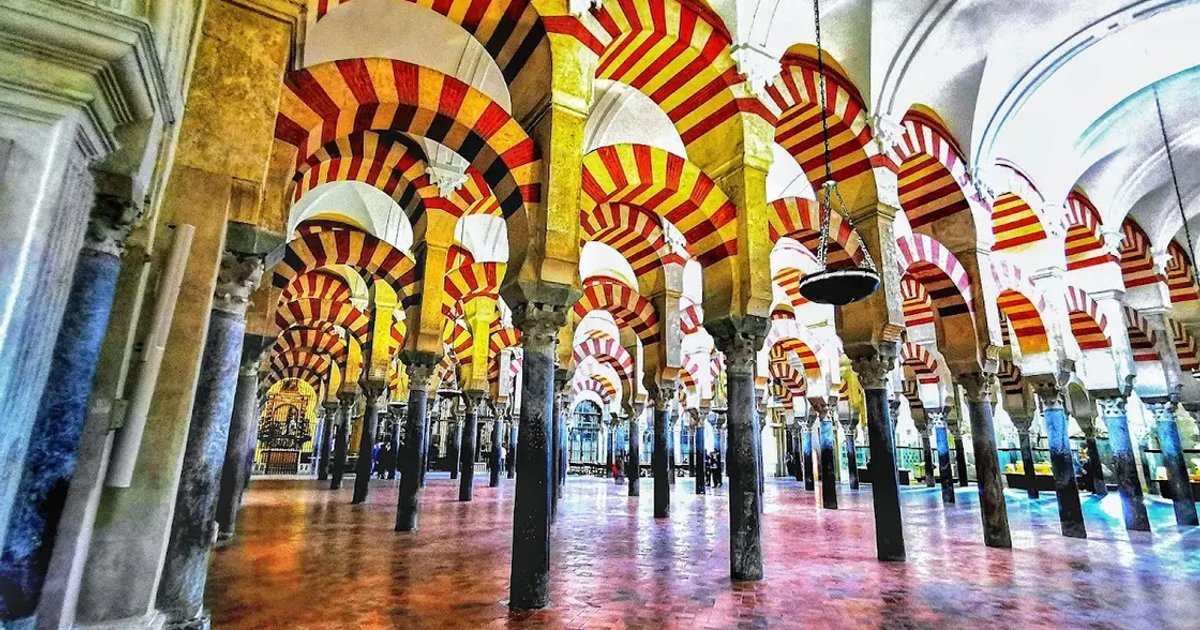
Mosque-Cathedral Skip-the-Line Guided Tour
Skip the queue and explore the Mezquita-Cathedral with a knowledgeable local guide. Discover 13 centuries of layered history in one of Spain's most iconic monuments.
1.5 hours
From €29
Skip queues up to 45 min
4.7 (6,882)
Reserve Your Spot
✓ Verified reviews · 6,882 travelers
Popular — books up weeks ahead in peak season
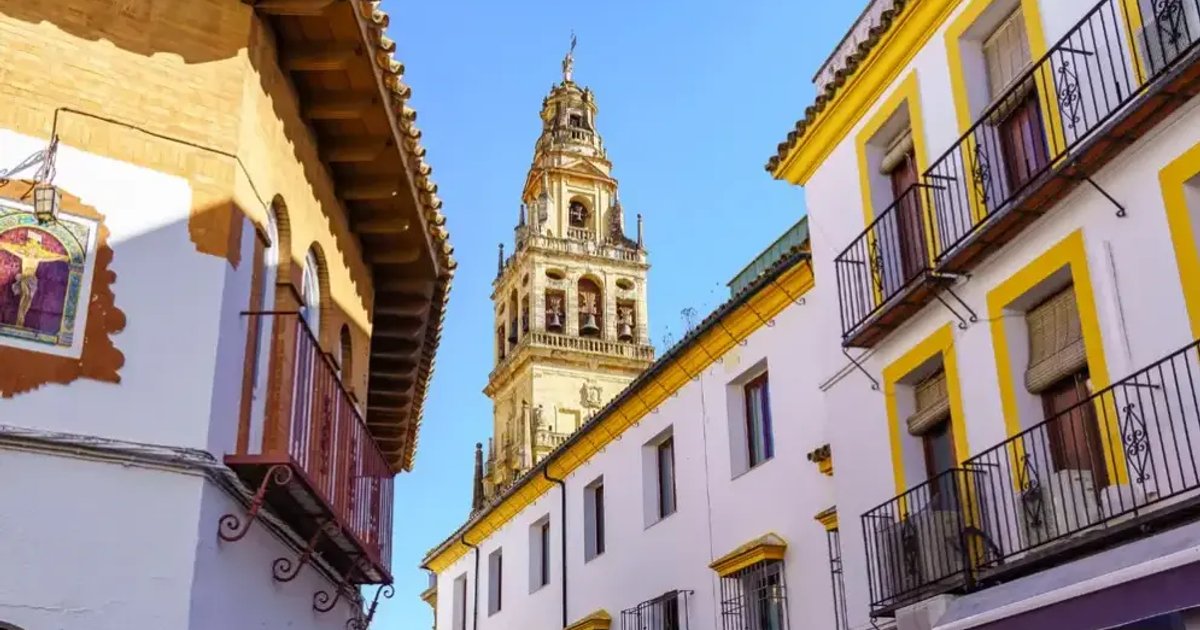
Jewish Quarter, Mosque & Alcázar Tour
A comprehensive guided tour covering Córdoba's three UNESCO-listed highlights: the Mezquita, the medieval Jewish Quarter, and the Alcázar de los Reyes Cristianos.
3 hours
From €49
4.7 (5,280)
Reserve Your Spot
✓ Verified reviews · 5,280 travelers
Popular — books up weeks ahead in peak season
Mosque-Cathedral Skip-the-Line Guided Tour
Beat the crowds with skip-the-line access and enjoy an expert-led tour through the breathtaking arches, mihrab, and cathedral choir of Córdoba's most visited monument.
1.5 hours
From €28
Skip queues up to 45 min
4.6 (5,182)
Reserve Your Spot
✓ Verified reviews · 5,182 travelers
Popular — books up weeks ahead in peak season