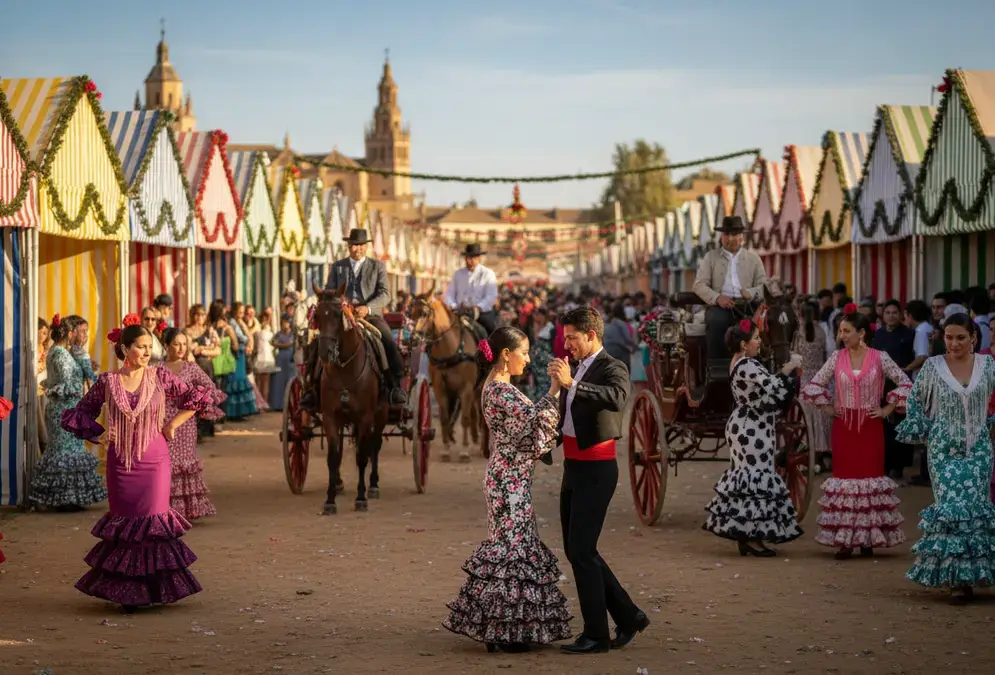
Late May • 8 days
Feria de Córdoba Guide
Andalusian horses, trajes de flamenca, rebujito cocktails, sevillanas until 6am. Unlike Seville, 85 of Córdoba's casetas are public and free — no invitation needed for most.

Written by
María Fernanda González Ten years covering Córdoba's UNESCO heritage sites, sourcing from Junta de Andalucía documentation.
Published
Updated
At a glance
- When
- Late May (8 days)
- Location
- El Arenal, banks of the Guadalquivir
- Entry
- Free — 85 casetas, most public
- Hours
- 1pm–6am (most activity 10pm–3am)
- Dress code
- Traditional flamenco dress encouraged
- Tip
- 85 casetas — vast majority public, no invitation needed
In this guide
Understanding the Feria de Córdoba
The Feria de Nuestra Señora de la Salud started as a medieval livestock fair, established in 1284 by King Alfonso X the Wise. Horses and bulls were the original draw. Over the centuries, the commercial market gave way to a popular celebration — casetas appeared in the 19th century, then the equestrian parade, then the fairground rides. The name itself dates to a cholera epidemic in 1849, after which the Virgin of Health became the city's protective patron.
Today, for eight days every May, the fairground district of El Arenal on the banks of the Guadalquivir transforms into an ephemeral city of lights, music, and Andalusian tradition. More than 500,000 visitors attend each year, the majority from Andalusia's neighbouring provinces.
What makes the Feria de Córdoba unique in Andalusia is its overwhelmingly open character. Unlike the Feria de Abril in Seville where the majority of casetas are private and reserved for members, the vast majority of Córdoba's 85 casetas are open to everyone. A handful of corporate or association tents are private, but you will rarely notice — just try the next one. Walk in, order a rebujito, dance sevillanas, and share the celebration with the people of Córdoba.
The feria has two entrance gateways. The second one, on the parking lot side, brings back the historic design that stood at Puerta de Gallegos until 1993 — a €300,000 investment that also included new paving and improved lighting. Two distinct entry points reduce bottlenecking when crowds hit, and the restored historic design adds real visual weight to the fairgrounds.
Day-by-day programme
Friday evening 11pm
Alumbrado — The Illumination
The mayor throws the switch from the monumental Portada gateway and ~300,000 bulbs illuminate simultaneously. Fireworks over the Guadalquivir follow. Arrive early to claim a spot near the entrance.
Saturday & Sunday 11am–2pm
Paseo de Caballos — Equestrian Parade
Riders in traditional traje corto and amazons in trajes de flamenca parade on pure-bred Andalusian horses. The iconic photo of the feria.
Opening Saturday 11:30am–2:30pm
Exhibición de Carruajes de Tradición
Around 15 traditional carriages in formal procession: concentration at Paseo de la Ribera (11:30h), exhibition at the Alcázar de los Reyes Cristianos (12:00h), arrival at El Arenal (13:30h). The Virgen de la Salud banner is transferred from the Alcázar to the fairground during this procession.
Wednesday All day
Día del Niño — Children's Day
All rides on the Calle del Infierno are half price. Guaranteed family atmosphere. The casetas offer activities for younger visitors in the afternoon.
Thursday 10am–1pm
Día del Caballo — Equestrian Competition
Official dressage competition and stallion presentation. The finest breeders from Andalusia come to show their best horses. An event for true aficionados.
Final Sunday 12:30am
Closing Fireworks
Grand final fireworks display launched from Torre de la Calahorra and the Puente Romano. Visible across the El Arenal neighbourhood and the banks of the Guadalquivir.
A typical feria day
11am–2pm
Morning equestrian parade — Procession of Andalusian horses, elegant and relaxed atmosphere. Families with children. Ideal for photography.
2–5pm
Lunch break — The casetas empty out. The perfect time to rest or eat in the city.
5–10pm
Tardeo — The festive afternoon begins. First sevillanas, rebujitos, convivial atmosphere. Families and young people mix freely.
10pm–2am
Feria night — The atmosphere reaches its peak. Non-stop dancing, live orchestras, chance encounters. The heart of the celebration.
2–6am
Late night — Only the most committed remain. Late-night flamenco, deep conversations at the bar. Sunrise over the Guadalquivir.
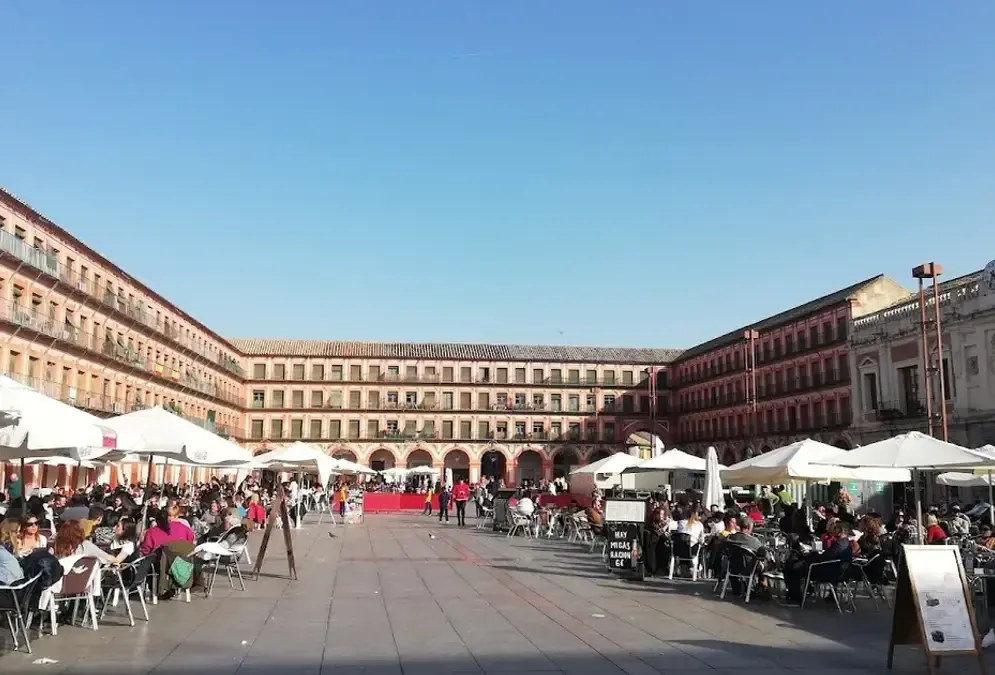
The Plaza de la Corredera comes alive during the Feria de Córdoba
The best casetas to visit
85 casetas fill the fairground, the vast majority public and free. Walk into almost any of them without an invitation.
Each caseta has its own identity and atmosphere — no two evenings are alike.
First-timers expecting wall-to-wall flamenco often get a surprise: through the early evening, many casetas run 80s and 90s cover bands — think Los del Río, Mecano, generic Eurodisco — and the dance floors fill just as readily for those sets. Sevillanas take over completely from midnight onwards, and that's the sound that carries till 4am. The musical variety is part of the charm.
Verde y Albero — Calle Puente Romano
First-timers always end up here, and for good reason. The layout is simple, the bartenders know what they're doing, and the crowd skews friendly rather than cliquey. You can actually have a conversation without shouting over a live band.
Gloria Bendita — Calle Mezquita
Cortijo-style architecture with whitewashed walls and a proper patio feel, live performances most nights, and kitchen output that takes the food seriously. The wine list is honest, and the rabo de toro tastes like someone's grandmother made it.
Gazpacho & Tocateja — Calle Los Patios
Built for people who came for the music. Planeta 80 and Versión 2.0 rotate through the schedule, which tells you everything about the vibe here. Tight dance floor, loud and unironic.
Malva y Oro — Calle Tendillas
Won best portada design in recent years, and walking in, you see why. The entrance portal is genuinely showstopping. Different rooms, different energy, good sightlines from most spots.
La Bodega de PTV — Calle Judería
Won best patio award. Wine-focused atmosphere, which means the crowd tends quieter and the conversation deeper. If you want to actually taste what you're drinking instead of just chasing the buzz, this is the place.
How to choose your caseta
- For a first visit: Start at the Caseta Municipal (large, central, varied programme)
- For local atmosphere: Visit several peña casetas, moving freely between them
- For wine: Montilla-Moriles bodega casetas (tastings, winemaker advice)
- For pure flamenco: Caseta Flamenca or bullfighting casetas (passionate atmosphere, deep song)
- With children: Family casetas with daytime entertainment (identifiable by colourful decorations)
Insider tip
Don't get attached to a single caseta. The charm of the Córdoba feria is being able to move freely and discover several different atmospheres in the same evening. This is a privilege unique to Córdoba in all of Andalusia.
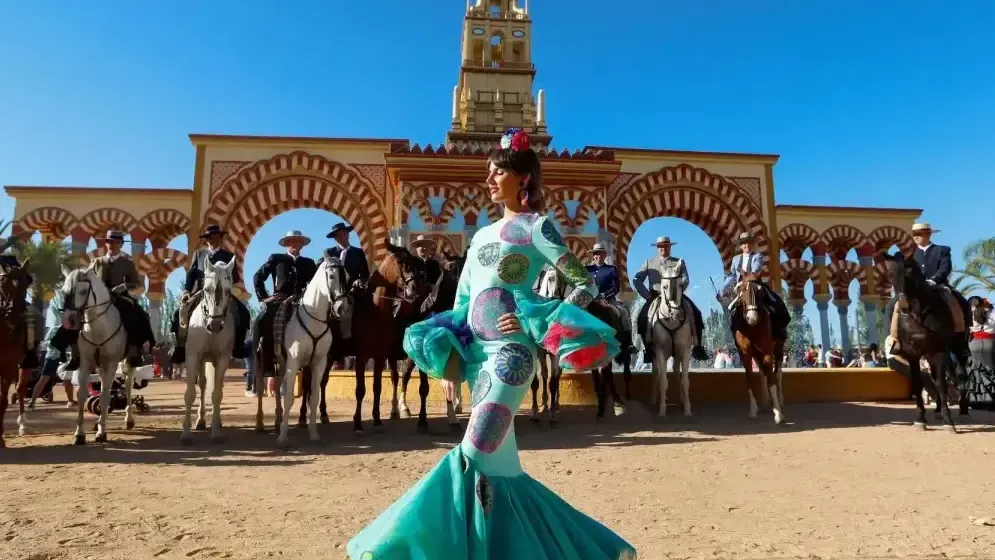
El Arenal transforms into a city of lights for eight days every May
Feria de Córdoba vs Feria de Abril (Seville)
| Criterion | Córdoba | Seville |
|---|---|---|
| Dates | Late May (8 days) | April (7 days after Holy Week) |
| Caseta access | Vast majority public and free | 70% private (invitation required) |
| Attendance | 500,000 visitors (manageable) | 1+ million visitors (very dense) |
| Atmosphere | Family-friendly, convivial, accessible | Glamorous, social, selective |
| Hotel prices | +30–50% (€110–260/night) | +100–200% (€200–500/night) |
| Scale | 85 casetas across 90,000 m² | 1,000+ casetas across 450,000 m² |
| Traje de flamenca | Encouraged but not obligatory | Near-obligatory (strong social code) |
| Best for | Authentic, inclusive discovery | Grand, exclusive experience |
Our take: If you are visiting Andalusia for the first time and want to experience a feria without social pressure or excessive cost, Córdoba is the better choice. You get the complete experience without the frustration of private tents. Seville is more spectacular but geared toward insiders or generous budgets. For a deeper look at what actually separates the two ferias — history, caseta culture, food, and scale — read Feria Córdoba vs Seville: The Real Differences.
“85 casetas, nearly all open to everyone. Walk in, order a rebujito, dance sevillanas. No invitation needed — that is the Córdoba way.”
The Andalusian horse parade
The Paseo de Caballos (horse promenade) is one of the most iconic and photogenic moments of the Feria de Córdoba. Every morning from 11am to 2pm, hundreds of riders in traditional traje corto and amazons in trajes de flamenca parade proudly on their pure-bred Pura Raza Española horses.
White and dappled-grey horses, worked leather harnesses, historic four-horse carriages, children perched in front of their fathers in the saddle. This is Andalusian equestrian culture at its full extent, with the Guadalquivir and Torre de la Calahorra as a backdrop.
Why the horses?
The equestrian tradition of the feria goes back to its medieval origins as a livestock fair. Andalusian breeders came to present and sell their finest horses. The commercial aspect has gone, but the pride in horsemanship has remained.
Today, taking part in the parade is a social honour: owning a pure-bred Andalusian horse, mastering classical equitation, and parading as a family are markers of belonging to Córdoba's rural and urban elite.
The Andalusian horse (Pura Raza Española) is a historic breed prized for its docility, elegance, and aptitude for dressage. It is the horse of the bullfight and the equestrian show.
Photography tips
- Best time: 12pm–1pm (soft light, parade at its height)
- Best spot: Paseo de la Ribera (main parade avenue, shaded by plane trees)
- Telephoto lens: 70–200mm to isolate a rider; wide-angle for context
- Framing: Include the monumental Portada gateway or the Guadalquivir in the background
- Patience: Wait for the four-horse carriages (rarer but spectacular)
Exhibición de Carruajes de Tradición — opening Saturday
Separate from the horse parade, the opening Saturday hosts the Exhibición de Carruajes de Tradición: around 15 historic coaches in formal procession. The carriages concentrate at Paseo de la Ribera at 11:30h, move to the Alcázar de los Reyes Cristianos at 12:00h for an exhibition, then depart for El Arenal at 13:30h. The procession ends with a family photograph and a final paseo through the recinto at 14:30h. The transfer of the Virgen de la Salud banner from the Alcázar to the fairground forms part of this procession.
Día del Caballo — Thursday
Thursday is officially dedicated to the horse. A dressage competition and stallion presentation runs in the morning, drawing the finest breeders from Andalusia. Judges assess conformation, movement, obedience, elegance. A connoisseur's atmosphere — technical discussions between aficionados, trophy presentations at close. If you love horses, this is a privileged moment.
See the feria in action
Short clips from recent editions of the Feria de Córdoba
Portada Feria de Córdoba 2024
Portada entrance gateway
Calle del Infierno rides
Feria de Córdoba 2025
La Feria de Córdoba
What to wear at the feria
Wearing a traje de flamenca is not obligatory for visitors, but it is warmly encouraged for women who want to fully experience the feria. Men should dress smart casual — no shorts or flip-flops.
For women
Option 1: Traje de flamenca
- ·Purchase: €80–300 (specialist shops in Córdoba)
- ·Hire: €40–80/day (city centre boutiques)
- ·Accessories: shawl, hair comb/flower, earrings
- ·Shoes: comfortable heels (lots of walking!)
Benefits: Full integration, unforgettable photos, warm welcome from locals
Option 2: Smart elegant outfit
- ·Colourful summer dress, midi skirt + blouse
- ·Heeled shoes or sandals (avoid trainers)
- ·Statement jewellery, bold make-up welcome
Benefits: Comfortable, no investment required, still within the elegant dress code
For men
Option 1: Traje corto (riders only)
The traditional Andalusian costume is reserved for horsemen taking part in the equestrian parade. Only wear it if you are riding. Wearing it on foot would be seen as cultural appropriation.
Option 2: Smart casual (recommended)
- ·Chinos or clean jeans (not ripped)
- ·Short-sleeve shirt or polo
- ·Closed shoes (oxfords, loafers)
- ·Avoid: shorts, flip-flops, vests
This is what 90% of men at the feria wear (except riders)
Absolute no-nos: Shorts, flip-flops, sports t-shirts, baseball caps, hiking backpacks. The dress code is respected even in the heat.
Where to hire or buy a traje de flamenca
Hire: Many shops in the historic centre. Book 2 weeks ahead. Expect €40–80 for 1–2 days, accessories included.
Buy new: Specialist shops around Plaza de las Tendillas: €80–300. Worthwhile if you plan to attend several ferias.
Buy second-hand: Flea markets, local Facebook groups. €30–60. Variable quality.
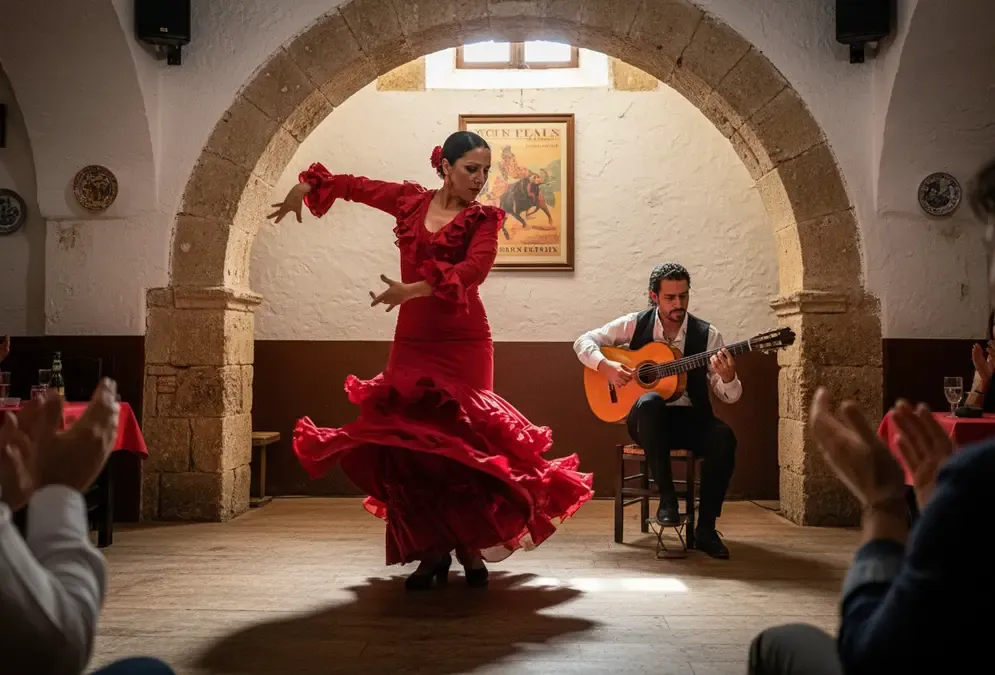
Wearing a traje de flamenca is warmly encouraged — and makes for extraordinary photographs
Feria gastronomy
The feria is as much a feast for the palate as for the ears. Each caseta has its own bar and kitchen, serving traditional tapas and Andalusian drinks. Prices are reasonable (€2–5 per tapa, €2–3 per rebujito) and quality is generally excellent.
Rebujito
Fino wine and lemonade cocktail, the emblematic feria drink
Boquerones fritos
Fried anchovies, classic feria tapas
Salmorejo
Córdoba's cold tomato soup
Rabo de toro
Slow-cooked oxtail stew
Must-try food and drink
Drinks
- ·Rebujito — the feria cocktail (fino + lemonade)
- ·Fino de Montilla — dry Andalusian white wine
- ·Tinto de verano — red wine + lemonade
- ·Cerveza — ice-cold draught beer
Tapas
- ·Salmorejo — Córdoba's chilled tomato soup
- ·Boquerones fritos — crispy fried anchovies
- ·Flamenquín — breaded pork loin roll
- ·Rabo de toro — braised oxtail stew
Budget tip: Eating in the casetas is cheaper than restaurants in the city centre. Budget around €10–15 for a full meal (3 tapas + 2 drinks). Portions are generous. For provisions before the feria, the food markets guide covers the covered markets closest to El Arenal.
How to order
Go to the bar and order directly — no table service. Pay in cash immediately. Useful phrases: "Un rebujito, por favor" · "Dos cervezas" · "¿Qué tapas tienen?" · "La cuenta". Bar staff understand basic English.
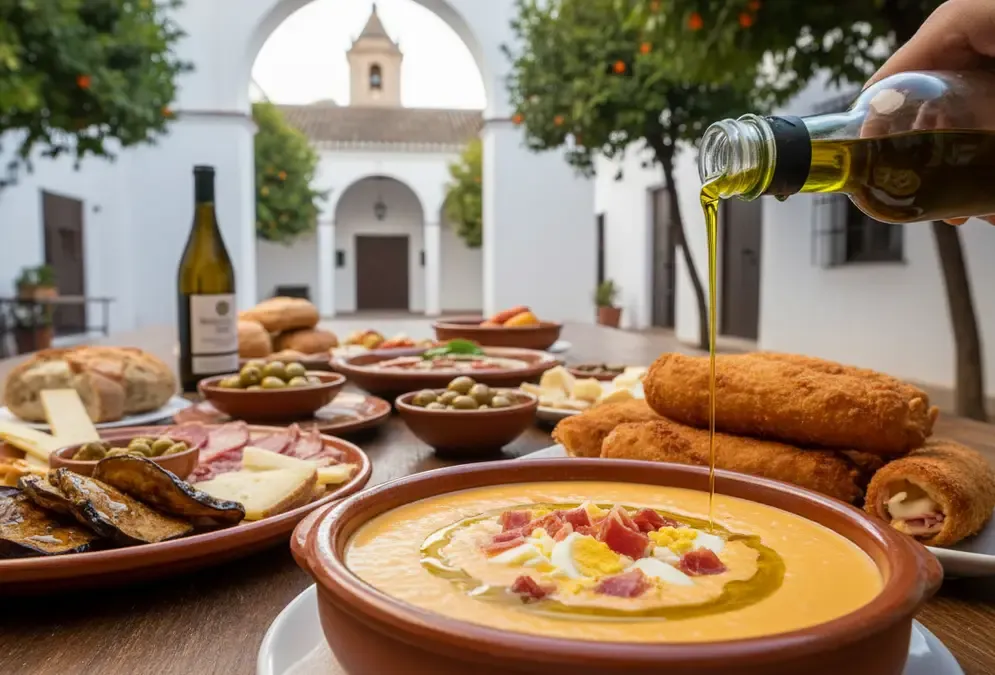
Each caseta runs its own kitchen: salmorejo, flamenquín, rabo de toro, and cold rebujito
Calle del Infierno — Fairground rides
The "Calle del Infierno" ("Street of Hell") is the fairground rides area, with more than 80 attractions for all ages. The colourful name refers to the infernal noise of the rides, the flashing lights, and the general excitement that reigns there.
Main attractions
- Big wheel (Noria) — panoramic view over Córdoba, romantic at night
- Rollercoasters — several models, thrills guaranteed
- Dodgems — timeless classic, family atmosphere
- Children's rides — carousels, teacups, mini trains
- Game stalls — shooting gallery, duck fishing, lottery
- Ghost train — kitsch decor, guaranteed frights
Prices and tips
Average prices: €2–5 per attraction depending on size and duration. Family packages available at some stalls.
Wednesday = Día del Niño: All attractions at –50%. Ideal for families on a budget. Maximum crowds in the afternoon.
Best time: 5–8pm to avoid evening crowds, or after midnight once families have left.
Do I have to visit the Calle del Infierno? Not at all. Many adults come only for the casetas, horses, and festive atmosphere. The rides are mainly for families and teenagers — you can skip the area entirely and stay in the caseta zone.
Getting to the feria
The feria takes place in the El Arenal district, on the Guadalquivir riverbanks, 15 minutes' walk from the historic centre (Plaza de las Tendillas). During the 8 days, 13 special bus lines run 24 hours a day for easy access.
Afternoon visits are more manageable than they once were: shade canopies on the two main fairground streets, Guadalquivir and Enmedio, take the edge off peak heat. Between 3pm and 7pm in late May temperatures can hit 38°C; plan accordingly and use the casetas as shade.
Main bus lines
21
City centre → El Arenal
Every 10 min
23
AVE station → El Arenal
Every 15 min
29
North neighbourhoods → El Arenal
Every 20 min
Fare: €1.30 per journey. Tickets sold on the bus (exact change recommended).
Walking from the centre: 20 min from the Mezquita via Puente Romano; 15 min from Plaza de las Tendillas. A pleasant riverside walk on the way in — tiring at 3am on the way back, less ideal in heels. Take the bus home.
Driving: Not recommended — traffic jams guaranteed in the evening. If you drive, park at Estación de Autobuses (€2/day) and take bus 23. Drink-driving strictly enforced: legal limit ~2 drinks maximum.
Taxi / rideshare: Taxis at feria entrances until 2am (scarce after). €8–12 from Plaza Tendillas to El Arenal. Cabify and Free Now work in Córdoba; Uber is limited.
Arriving by AVE train
Madrid–Córdoba: 1h 47min, 10+ trains daily. Renfe runs special feria pricing most days (not Fridays/Sundays). Book at renfe.com. The station is 10 min from El Arenal by taxi.
Our tip: If you are staying in the historic centre, walk there (enjoy the evening air and the river), then take a night bus back (comfort, less tiring). Buses 21/23/29 run all night.
Where to stay during the feria
Book 3–4 months ahead. Prices rise 30–50% during the feria, especially over the opening weekend. The best spots in the historic centre go fast.
Option 1: Historic centre (Judería)
Ideal for being close to the monuments and having a base to rest between feria outings. 15–20 minutes' walk from El Arenal.
Recommended hotels:
- ·Parador de Córdoba — Historic luxury, €180–320/night
- ·Eurostars Conquistador — Mezquita views, €140–260/night
- ·Hacienda Posada de Vallina — Charm, €110–190/night
Option 2: Station area (modern)
More affordable, well connected by bus. Ideal if you arrive by AVE train. Less touristy atmosphere.
Benefits:
- ·Prices 20–30% cheaper than in the Judería
- ·Direct feria bus (line 23) every 15 minutes
- ·Supermarkets and pharmacies nearby
- ·Chain hotels (NH, AC Hotel, Tryp)
Option 3: Apartment / Airbnb
Popular for groups of friends or families. Allows you to cook and return home together after the feria. Budget: €80–150/night for a 4-person apartment in the centre.
Option 4: Day trip from Seville
AVE train Seville–Córdoba: 45 minutes, €15–35 one way. Last trains around 10:30–11 pm. Caveat: you will miss the night atmosphere (which peaks between 10pm–2am). Only feasible for a daytime visit (horses + caseta lunch).
Find Hotels for the Feria de Córdoba
Tours are selected for quality, not commission. We earn a small fee if you book — at no extra cost to you.
The feria runs late May into early June each year. Centre hotels fill weeks in advance and prices jump 30–50% — book as early as possible.
Words you'll hear at the feria
A quick glossary so nothing catches you off guard.
- Caseta
- Festival tent with bar and dance floor
- Rebujito
- Fino wine + lemonade over ice
- Sevillanas
- Traditional couples' dance in four verses
- Traje de flamenca
- Ruffled dress in bold colours or polka dots
- Traje corto
- Male rider's outfit with Córdoban hat
- Calle del Infierno
- "Street of Hell" — 80+ fairground rides
- Alumbrado
- Ceremonial lighting on opening night
- Portada
- Illuminated entrance gateway to the fairground
Feria etiquette
DO
- Greet people when entering a caseta ("¡Buenas!")
- Order and pay at the bar directly
- Dance even if you don't know how (people will help you!)
- Try the rebujito and local tapas
- Respect the horsemen (they have right of way in the streets)
- Dress smartly and elegantly
- Take photos but ask for permission for portraits
- Move between several casetas (that's the custom)
DON'T
- Get visibly drunk (frowned upon; you will be asked to leave)
- Be loud or aggressive (family atmosphere)
- Sit at an occupied table without asking
- Touch or pet the horses without permission
- Wear shorts, flip-flops, baseball caps (smart dress code)
- Smoke inside casetas (prohibited, fines apply)
- Drop litter on the ground (bins everywhere)
- Mock traditions or the dancing
How to dance sevillanas
Sevillanas are danced in couples in four verses — steps are codified but nobody judges improvisation. Watch a few couples first to pick up the structure, then join in. Perfectly normal to ask a stranger to dance ("¿Bailamos?"). Search "learn sevillanas beginners" on YouTube before you go.
On alcohol: Rebujito flows freely, but visible intoxication is frowned upon. Córdobans pace themselves over hours and remain dignified. If you are visibly drunk, security will ask you to leave. This is a celebration of pleasure, not excess. Drink water regularly — free from any bar on request.
Complete practical information
Weather
Late May: 28–35°C days, 16–20°C nights. Between 1–6pm, expect 38–41°C — this is what 2025 delivered; plan accordingly. Sunshine: 10–12 hours daily, rain risk under 15%. Bring a hat, effective sunscreen, and water. Casetas have shade and fans; use them as refuge in peak heat. Free fans circulate throughout. Light jacket useful after 3am.
Safety
Pickpockets: Rare but present — keep wallet and phone in a front pocket. Medical: Cruz Roja first-aid post at the main entrance, nurses 24h. Pharmacies on call in the city centre. Emergency: 112.
Accessibility
Adapted restrooms: 5 across the fairground, distributed so you're never far from one.
Wheelchair parking: 2 free designated zones (near Ciudad del Infierno stadium + behind stadium). Blue badge required.
Pneumatic trains: 3 trains loop the fairgrounds with 2 wheelchair spaces each. Operating during the final days of the fair, 12:00–15:00 and 18:00–22:00.
Sign language: SVisual system available at the Red Cross first aid station.
WhatsApp hotline: 621 07 43 11 for accessibility queries, lost items, traffic info, and bus schedules.
Bus transport: 13 special Aucorsa lines connect the fairground to all city zones.
Estimated budget (per person)
Accommodation (3 nights) €330–780
Caseta food (3 days) €90–150
Drinks (rebujito, beer) €60–100
Traje de flamenca hire (optional) €40–80
Fairground rides (optional) €30–50
Local transport €20–40
TOTAL €570–1,200
Corridas de toros
A taurine programme runs at the Plaza de Toros de Los Califas across the days before the caseta fair opens, parallel to the feria but not officially part of the programme. It is separately ticketed. The card is announced closer to the date at plazadetoroscordoba.com.
Accessibility at the feria
The feria has a comprehensive accessibility setup. Tactile directional paving runs the full length of Calle del Potro for white-cane users. Navilens QR codes at entry points give audio guidance in 39 languages. Spanish Sign Language (LSE) is available via SVisual at the Cruz Roja first-aid post and at all events in the Municipal Caseta. All casetas must have ramp access, a low-bar section, and adapted bathrooms. The FerIA WhatsApp chatbot (621 07 43 11) answers real-time questions about caseta locations, bus schedules, and accessibility services. Gluten-free visitors: the Celíacos Córdoba caseta on Calle Judería operates throughout the fair.
Official information
Website: turismodecordoba.org — programme, interactive map, bus timetables, downloadable PDF map. Tourism office: Plaza de las Tendillas, open daily during the feria. Tel: +34 902 201 774.
Ready to experience the Feria de Córdoba?
The feria runs in late May. Hotel prices rise 30–50% during those 8 days — book early to get the best rates in the historic centre.
Frequently asked questions
How many days should I plan for the Córdoba Feria?
Two evenings plus the opening Friday Alumbrado make a complete experience. The first Saturday draws the biggest crowds and best atmosphere; the penultimate Saturday has the peak fireworks. Mid-week afternoons allow quieter exploration, though casetas fill properly only after 9 pm. If you have a single evening, the opening Friday lighting ceremony is the most distinctive moment.
What makes the Córdoba Feria different from the Seville Feria de Abril?
The vast majority of Córdoba's 85 casetas are public and free to enter — the defining difference from Seville. At the Feria de Abril, most casetas are private and require an invitation; Córdoba's feria is genuinely open to almost everyone. A small number of corporate or association casetas are private, but you will rarely notice. This makes it far more accessible for visitors and gives it a warmly inclusive atmosphere that Seville's feria, impressive as it is, does not replicate.
What is a rebujito?
Rebujito is the feria's signature cocktail: fino wine (dry sherry from Montilla-Moriles) mixed with lemonade and served over ice. It is the most popular drink at the feria and costs around €2–3 per glass.
Is it worth staying overnight in Córdoba for the Feria?
Yes — the feria only comes alive after dark, and the best moments run until 3 or 4 am. Staying in the city centre (El Arenal is a 15-minute walk or a €1.30 bus ride) lets you pace yourself across multiple evenings rather than burning out in one long night. Hotels in the historic centre are a better base than near the fairground itself.
Do I need to wear a traje de flamenca?
It is not obligatory but warmly encouraged for women. Men should dress smart casual (no shorts, flip-flops, or sports t-shirts). You can hire a traje de flamenca for €40–80/day from shops in the historic centre.
What surprises first-time visitors most about the Córdoba Feria?
The scale and the openness. Many visitors expect a small local event and find 85 casetas stretching across an entire neighbourhood, most of them public and free to walk into. The horse parade on the opening Saturday — hundreds of Andalusian horses and traditional carriages — is a sight most visitors do not anticipate. Arriving before the lighting ceremony on the first Friday is the single best planning decision you can make.
Further reading
Sources
- Ayuntamiento de Córdoba — Feria de Nuestra Señora de la Salud (opens in a new tab)
Official Córdoba city information on the Feria
- Córdoba Tourism Office (opens in a new tab)
Official feria guide and cultural events
- Spain.info — Traditional Andalusian Fairs (opens in a new tab)
Official calendar of ferias in Andalusia
Book tours & activities in Córdoba
Tours are selected for quality, not commission. We earn a small fee if you book — at no extra cost to you.
Guided tours, skip-the-line tickets, and bookable experiences — browse everything available in Córdoba.