Local food culture
Food Markets in Córdoba
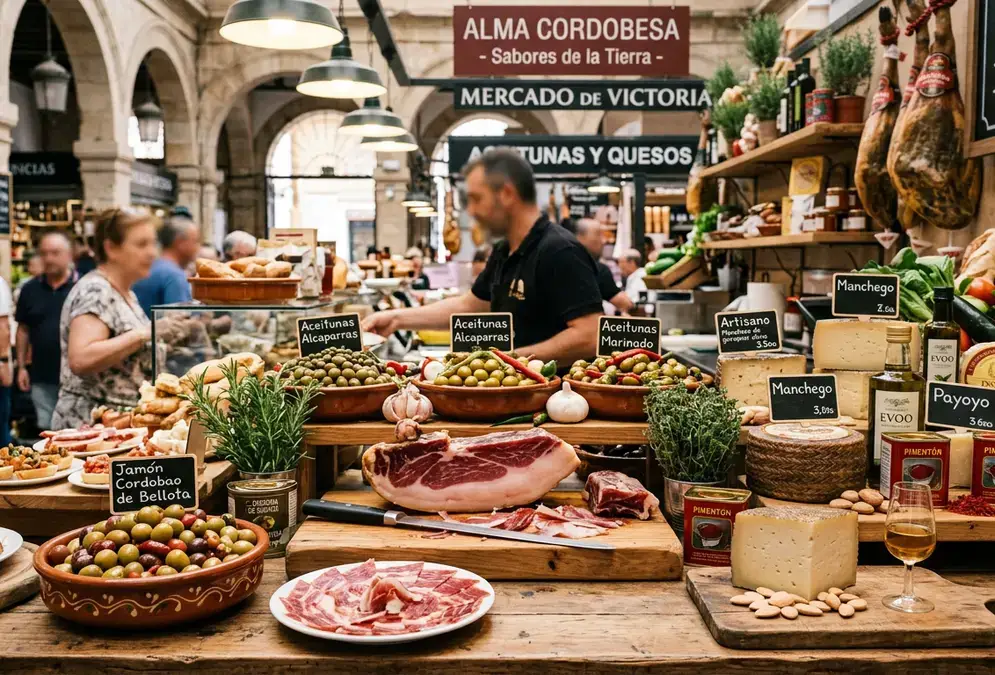
In Córdoba, a market is not a place to buy groceries. It is a social institution, a neighbourhood meeting point, a place where fishmongers know your name and the olive oil vendor insists you taste before you commit. From a renovated 1877 pavilion to a centuries-old plaza, these four markets reveal a side of the city that restaurants alone never will.

Written by
Pedro Del Pozo Seven years covering Córdoba's gastronomy, taberna culture, and the Montilla-Moriles DO.
Published
Updated
| Category | Victoria | Corredera | El Arenal | La Feria |
|---|---|---|---|---|
| When | Daily, noon–midnight | Mon–Sat, 8:30–14:00 | Sundays, 10:00–14:00 | Last week of May |
| Type | Gourmet food hall | Fresh produce market | Outdoor flea + food | Festival casetas |
| Budget | €5–15 per dish | Produce prices | 30–40% below retail | €3–8 per dish |
| Best for | Wine tasting, evening crawl | Local atmosphere, fresh fish | Olive oil, souvenirs | Traditional food, festive |
In this guide
Why Markets Matter in Córdoba
Supermarkets exist in Córdoba, but they have never replaced the market. Walk through the Centro on a Saturday morning and you will see retired men arguing about the quality of the sardines, mothers sending their teenagers to buy tomatoes for salmorejo, and tourists who wandered in by accident and are now being handed free samples of manchego.
Córdoba's markets trace back to the Moorish period, when the city was the largest in western Europe and its souks overflowed with spices, silk, and produce from across the Mediterranean. That tradition never died. It just moved indoors, then outdoors again, then into a renovated Victorian-era iron pavilion.
Each of the four markets in this guide serves a different purpose. Mercado Victoria is where you go to eat. Corredera is where you go to shop. El Arenal is where you go to discover. And La Feria is where you go to celebrate. Together, they form a complete picture of how Córdobans relate to food: with pride, sociability, and a total absence of pretension.
Outside this core four, one market deserves a separate note: the Ecomercado, Córdoba's first certified organic market, which runs on the first Saturday of each month on the Bulevar de Gran Capitán. It is not a typical tourist stop — 40+ stalls of verified organic produce, cold-pressed oils, raw honey, and artisan sourdough, drawing a crowd of regulars rather than visitors. Worth planning a trip around if your Saturday falls right.
“The market is not where you buy food. It is where you belong to a neighbourhood.”
Mercado Victoria
Practical info
- Location
- Paseo de la Victoria, next to Jardines de la Victoria
- Hours
- Daily, noon to midnight (Fri-Sat until 1am)
- Price range
- €5-15 per dish
- Best for
- Evening food crawl, wine tasting, group dining
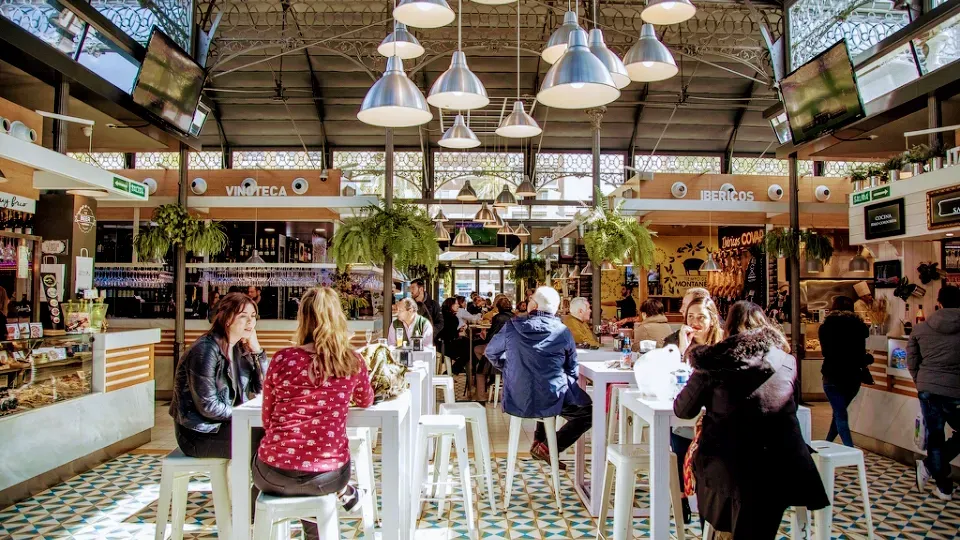
Mercado Victoria occupies an 1877 iron pavilion restored as Andalusia's first gourmet food hall
Housed in a cast-iron pavilion built in 1877 and restored in 2013, Mercado Victoria was the first gastronomic market in Andalusia. The concept is familiar if you have visited Mercado de San Miguel in Madrid or La Boqueria in Barcelona: a collection of stalls under one roof, each specializing in something different, with communal seating throughout.
What makes Victoria different from its more famous cousins is the wine. The market stocks over 90 labels of Montilla-Moriles, the local denomination that most visitors have never heard of. Start at La Bodega del Mercado, the dedicated wine stall where most of those labels live, then move on to an amontillado at the next counter, and pair both with whatever the seafood stall is grilling that evening. It is a self-directed tasting route that would cost three times as much in a formal bodega.
The food leans gourmet-casual. Expect Iberian ham carved to order, sushi, artisanal burgers, and traditional Córdoban dishes like flamenquín and salmorejo. For salmorejo specifically, look for La Salmoreteca, a dedicated stall by Chef Juanjo Ruiz that serves both the traditional recipe and creative variations. The stalls rotate periodically, so the lineup changes year to year.
Best time to visit
Go on a Tuesday or Wednesday evening between 19:00 and 20:00. The weekend crowds have not arrived, many stalls offer midweek specials, and you can actually sit down without hunting for a seat.
Cata del Vino Montilla-Moriles (April 22-26, 2026)
This is a separate outdoor wine tasting festival held on Avenida del Alcázar, near the Alcázar gardens, not at Mercado Victoria. Around 15 wineries pour their Montilla-Moriles wines at open-air stands. Entry is free; a tasting wristband with 5 tastings and a souvenir wine glass costs EUR 13. Hours: 12:00 to 20:00 daily. The Alcázar is a 15-minute walk from Victoria, so you can combine both in a single afternoon. Check cata.montillamoriles.es for updates.
Mercado de la Corredera
Practical info
- Location
- Plaza de la Corredera (inside the arcades)
- Hours
- Mon-Sat 8:30-14:00 (closed Sundays)
- Price range
- Fresh produce prices, no entrance fee
- Best for
- Local atmosphere, fresh fish, morning shopping
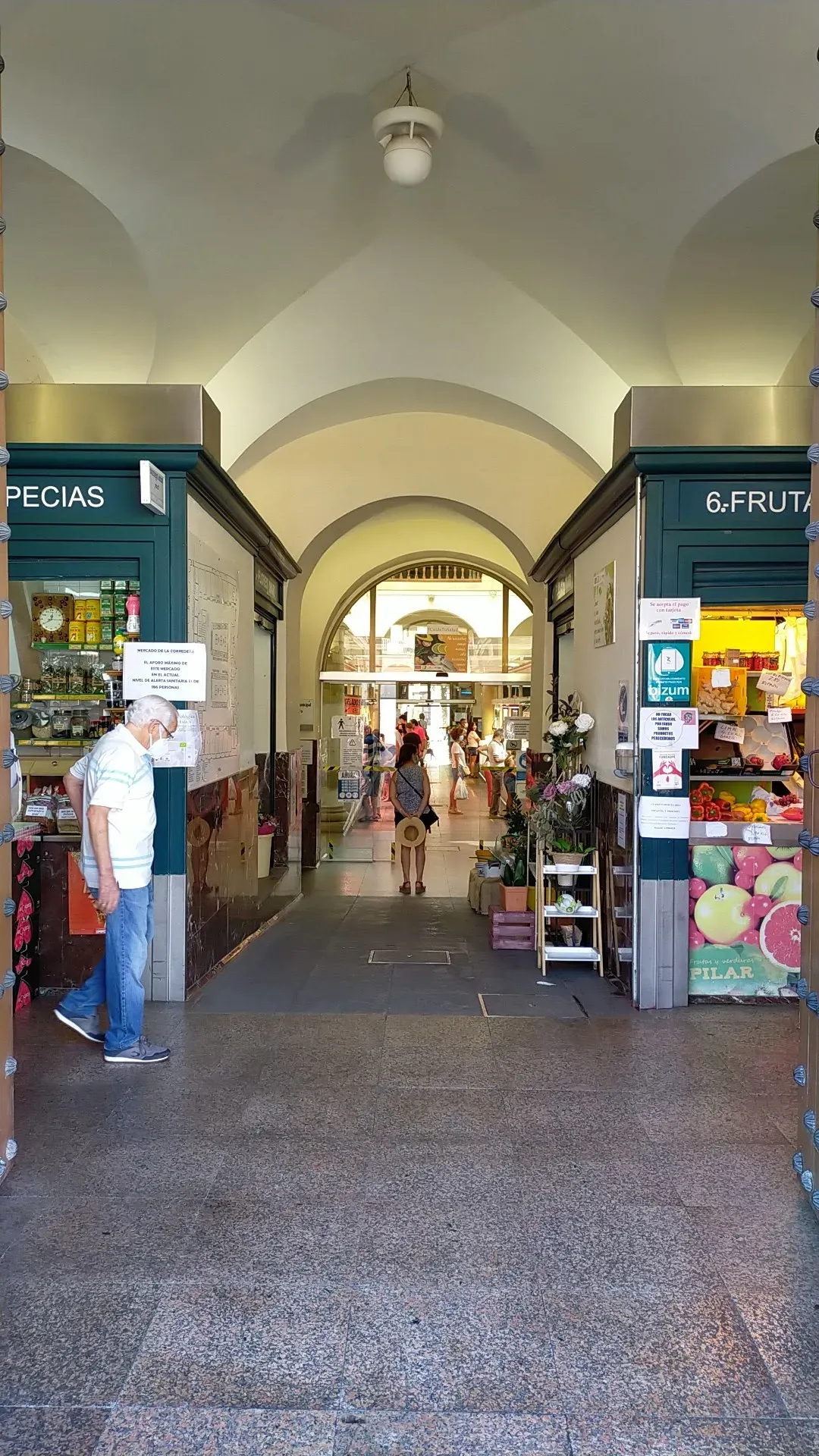
The Corredera market hides inside the arcades of Córdoba's only Castilian-style plaza
This is the market that tourists rarely find. Tucked inside the arcades of Plaza de la Corredera, Córdoba's only Castilian-style rectangular plaza, the Corredera market has been feeding the neighbourhood since the 17th century. There is no signage in English. There are no Instagram hashtags on the walls. There is just food.
The fishmongers are the stars. At the best stalls, you choose your fish, they clean it, and the attached grill fires up on the spot. Eating sardines at 11:00am while standing at a counter in a centuries-old plaza is the kind of experience that no restaurant can replicate. The produce stalls stock seasonal fruit and vegetables from the Guadalquivir valley, and the cheese vendors carry regional varieties that never make it to supermarket shelves.
The plaza itself is worth the visit even without the market. The terracotta-coloured arcades date from the 17th century, and the surrounding cafes serve some of the cheapest coffee in the city centre. The tapas bars under those arcades are where locals eat salmorejo at honest prices: try La Cazuela de la Esparteria, where it is a signature dish, or Casa Salinas nearby, where nothing on the menu tops EUR 12. Get there by 9:00am to see the market at its busiest and most alive.
Ask for this
Ask any fish vendor for "pescaíto frito para llevar" (fried fish to go). They will fry up whatever is freshest that morning, wrap it in paper, and hand it to you for €3-5. Eat it on the plaza steps with the pigeons.
“If you want to understand a city, go to its morning market. That is where nobody is performing.”
El Arenal Sunday Market
Practical info
- Location
- Calle Infierno (Mercadillo del Arenal)
- Hours
- Sundays 10:00-14:00 (year-round)
- Price range
- Producer-direct prices, 30-40% below retail
- Best for
- Olive oil, wine, regional products, souvenirs
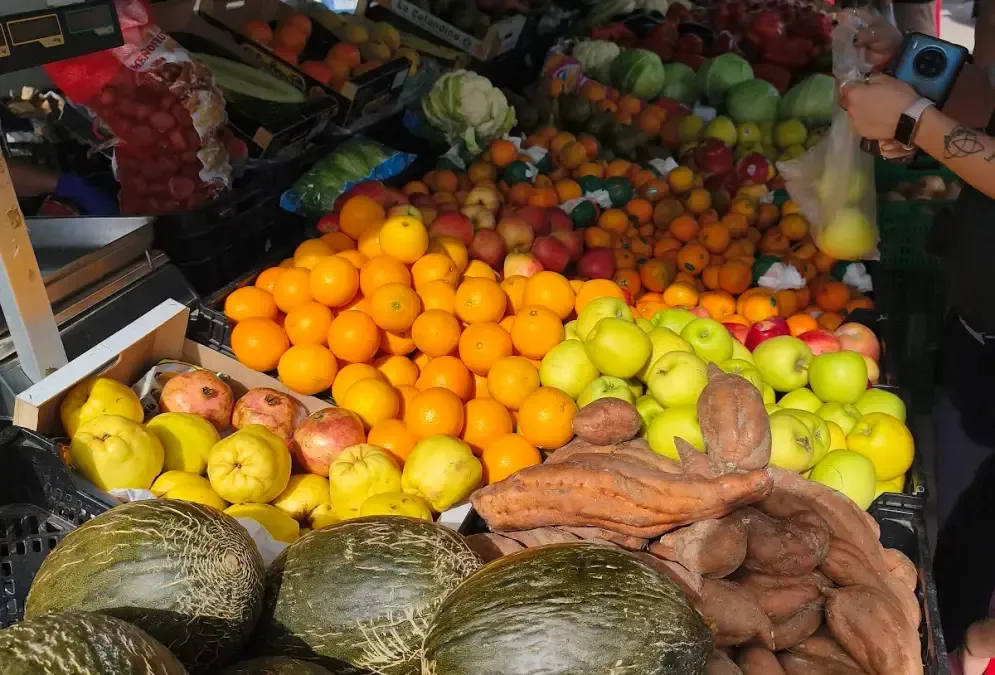
Over 240 stalls line Calle Infierno every Sunday morning for Córdoba's largest outdoor market
Every Sunday morning, over 240 stalls line Calle Infierno near the river for what is Córdoba's largest outdoor market. El Arenal (also known as Mercadillo del Arenal) is part flea market, part food market, and part social event. The food section concentrates on regional products: DOP olive oils from Priego de Córdoba and Baena, Montilla-Moriles wines, cured hams, artisanal cheeses, honey, dried fruits, and spices.
What makes El Arenal special is direct contact with producers. The olive oil vendors are often the farmers themselves, selling from the back of vans loaded with five-litre tins. You can taste three or four oils side by side, learn the difference between hojiblanca and picual varieties, and walk away with a year's supply for what you would pay for a single bottle at a gourmet shop in London. The same goes for wine: small Montilla-Moriles bodegas sell bottles here that never reach export markets.
Beyond food, the market sells clothing, household goods, ceramics, leather goods, and antiques. The atmosphere is lively but not aggressive. Vendors do not shout. Haggling is acceptable on non-food items but not expected on food products. Bring cash: many stalls do not accept cards.
Timing matters
El Arenal runs on Sundays only. Any other day, the site is empty. Arrive by 10:30am and go directly to the food section (the eastern end of the market, closest to the river). By noon, the best olive oils are sold out and the crowds make browsing difficult. Bring your own reusable bags.
La Feria de Córdoba Food Scene
Practical info
- Location
- El Arenal fairgrounds, by the Guadalquivir
- Dates
- Last week of May
- Price range
- €3-8 per dish at casetas, free entry
- Best for
- Traditional food, rebujito, festive atmosphere
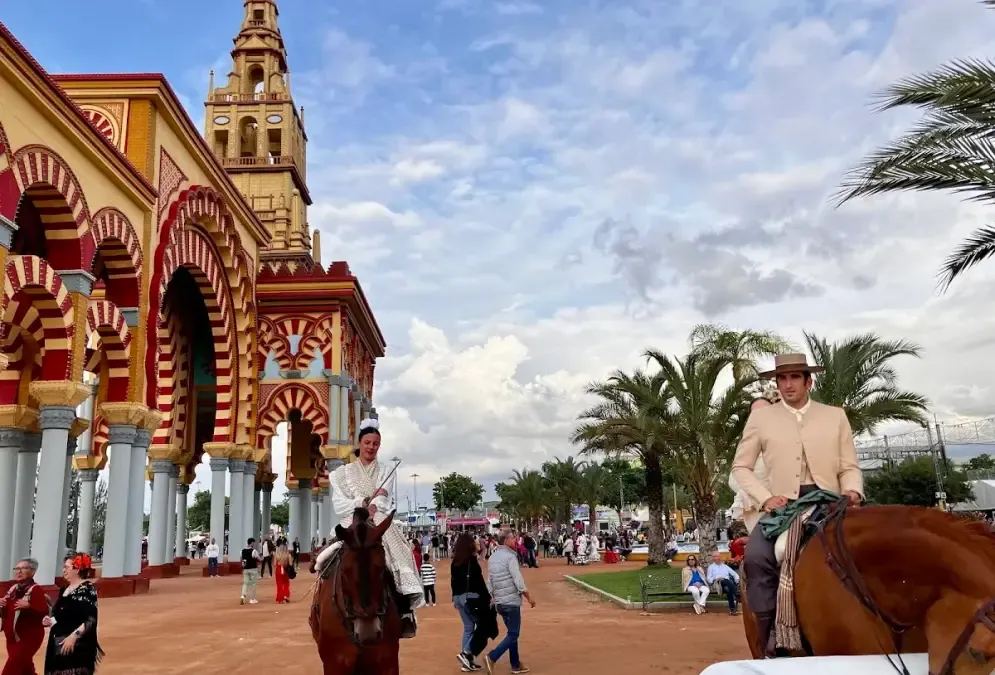
Over 180 casetas serve food, tapas, and rebujito throughout Feria week in late May
The Feria de Córdoba is not a food market in the traditional sense. It is a week-long spring festival with roots dating back to 1284, and food is at its centre. Over 180 casetas (temporary pavilions) line the fairgrounds, each run by a family, social club, or local association, and each serving food from midday until deep into the night.
The standard Feria meal is simple: fried fish, empanadas cordobesas, chocos fritos (fried cuttlefish), and rebujito by the pitcher. Some casetas push beyond the basics with grilled meats, paella, and regional stews. The atmosphere is loud, warm, and completely without pretension. You eat standing up, you drink from plastic cups, and you talk to everyone.
Most casetas are technically private (belonging to a peña or club), but in practice the larger ones welcome anyone who walks in. Look for casetas with open doors and no queues. The municipal casetas are always public. If someone offers you a plate or a drink, accept. That is the entire point.
Insider tip
Wednesday and Thursday of Feria week are the least crowded nights. The weekend is a crush. If you want to eat well and actually find a seat, go on a weeknight and arrive by 14:00 for lunch or 21:00 for dinner.
“At the Feria, nobody eats alone. You share your table, your rebujito, and your stories.”
What to Buy and Bring Home
Córdoba's markets offer some of the best food souvenirs in Spain. The trick is knowing what travels well and where to get the best price. Here is what to look for.
Extra-Virgin Olive Oil (DOP)
Córdoba province produces some of the world's best olive oil. The two denominations of origin to look for are Priego de Córdoba (fruity, peppery) and Baena (rounder, buttery). Buy at El Arenal for €8-12 per litre from the producer, versus €15-20 in shops. Tins travel better than glass bottles.
Olive oil tasting experiencesMontilla-Moriles Wine
The local wine that fino-lovers and sommeliers are quietly obsessed with. Montilla-Moriles comes in styles from bone-dry fino to syrupy Pedro Ximenez. Mercado Victoria stocks 90+ labels. For producer prices, visit El Arenal or drive to the bodegas in Montilla (30 minutes south).
Montilla-Moriles wine guideJamón Ibérico
Jamón ibérico from the Pedroches valley (north of Córdoba) is among Spain's finest. Vacuum-packed slices travel well and clear EU customs without issues. Buy at Corredera market for local prices, or at Mercado Victoria pre-sliced and vacuum-sealed for convenience.
Jamón ibérico guideSpices and Dried Goods
Pimentón de la Vera (smoked paprika), saffron, cumin, and dried herbs are lightweight, inexpensive, and practically impossible to find at the same quality outside Spain. El Arenal and Corredera both have spice vendors. A tin of pimentón costs €2-4 and lasts months.
Browse all Córdoban dishesTravelling with food: what you need to know
- Olive oil must go in checked luggage (liquids rule). Wrap tins in plastic bags.
- Vacuum-packed ham is fine in hand luggage within the EU. For non-EU destinations, check customs rules.
- Wine bottles go in checked luggage. Wrap each bottle in a towel or clothing.
- Spices, dried goods, and cheese travel well in hand luggage.
Frequently asked questions
Which food market in Córdoba is open every day?
Mercado Victoria is the only food market open daily, from around noon until midnight (later on weekends). It operates as a gourmet food hall with sit-down stalls rather than a traditional produce market. For fresh produce, head to Mercado de la Corredera, open Monday to Saturday mornings.
Where can I buy olive oil directly from producers in Córdoba?
The best place is El Arenal Sunday market on Calle Infierno, where DOP Priego de Córdoba and DOP Baena producers sell directly. You can taste before buying and prices are 30-40% below retail. For a deeper experience, try an olive oil tasting at a mill outside the city.
Is Mercado Victoria worth visiting or is it a tourist trap?
Mercado Victoria draws both locals and tourists, and the quality is genuinely high. Prices run 20-30% above a regular restaurant for comparable food. The advantage is variety: you can try salmorejo at one stall, sushi at the next, and Montilla-Moriles at a third. Go on a weekday afternoon for fewer crowds.
What should I buy at a Córdoba food market to bring home?
The best souvenirs are shelf-stable and pack well: extra-virgin olive oil (DOP Priego or Baena), Montilla-Moriles wine (fino or Pedro Ximenez), smoked paprika (pimentón de la Vera), saffron, and vacuum-packed jamón ibérico. El Arenal Sunday market has the widest selection at producer prices.
When is the Feria de Córdoba food fair?
The Feria de Córdoba takes place during the last week of May. It is not a food market per se, but the 180+ casetas serve traditional dishes, tapas, and rebujito throughout the week. See our Feria guide for the full breakdown.
Can I eat breakfast at a food market in Córdoba?
Mercado de la Corredera opens at 8:30am and the surrounding cafes on Plaza de la Corredera serve breakfast from around 8:00am. Mercado Victoria does not open until noon. For the Sunday market, El Arenal starts at 10:00am. There is no early-morning market culture in Córdoba the way there is in Barcelona or Valencia.
Which Córdoba food market is best for tourists?
Mercado Victoria is the most accessible for tourists: it is open daily from noon until midnight, has English-speaking staff at most stalls, accepts card payments everywhere, and offers a wide variety of cuisines in one place. For a more authentic local experience, Mercado de la Corredera on weekday mornings gives you the real neighbourhood market atmosphere. El Arenal Sunday market is best for buying regional products like olive oil and wine directly from producers.
Where can I try authentic salmorejo in Córdoba?
La Salmoreteca at Mercado Victoria is the dedicated salmorejo stall in Córdoba, run by Chef Juanjo Ruiz, serving both the traditional cold tomato soup and creative variations. For a more local setting, the tapas bars around Plaza de la Corredera offer traditional salmorejo at lower prices: La Cazuela de la Esparteria makes it a signature dish, and Casa Salinas serves it alongside other Córdoban classics with nothing on the menu over EUR 12. The best-value salmorejo is generally found away from the Mezquita tourist zone, where prices are higher and portions smaller.
Is there a food market open on Sundays in Córdoba?
Yes. El Arenal (Mercadillo del Arenal) is Córdoba's Sunday market, open every Sunday from 10:00 to 14:00 on Calle Infierno near the Guadalquivir river. It has over 240 stalls selling food products, clothing, and household goods. Mercado Victoria is also open on Sundays (noon to midnight). Mercado de la Corredera is closed on Sundays.
Explore Córdoba's Food Scene
Markets are just the beginning. Córdoba's food culture extends from morning coffee at a plaza bar to late-night tapas in the Juderia. Start at the Corredera before lunch, work your way through Victoria in the evening, and save El Arenal for Sunday. Your stomach will thank you.
Further reading
Official sources
- Córdoba Tourism Office (opens in a new tab)
Official website of Córdoba's municipal tourism office
- Mercado Victoria (opens in a new tab)
Official website of Mercado Victoria gastronomic market
- Spain.info — Andalusian gastronomy (opens in a new tab)
Official Spanish tourism portal for gastronomy