JUST CONCLUDED — 29 March – 5 April 2026
March 28 – April 4, 2027 (Next Year)
Holy Week in Córdoba — Complete Guide
38 brotherhoods, 25,000 participants, and one moment nobody forgets: La Madrugada at midnight on Good Friday — absolute silence, drums echoing off 10th-century stone. Plan your visit with the complete schedule, best spots, and practical tips.

Written by
María Fernanda González Ten years covering Córdoba's UNESCO heritage sites, sourcing from Junta de Andalucía documentation.
Published
Updated
At a glance
- When
- Palm Sunday to Easter Sunday
- Processions
- Morning & evening, up to 6 hours each
- Cost
- Free (street viewing)
- Best spot
- Carrera Oficial on Calle Cruz Conde
- Brotherhoods
- 32 cofradías march through the city
- Book early
- Hotels sell out months in advance
In this guide
1
Understanding Holy Week in Córdoba
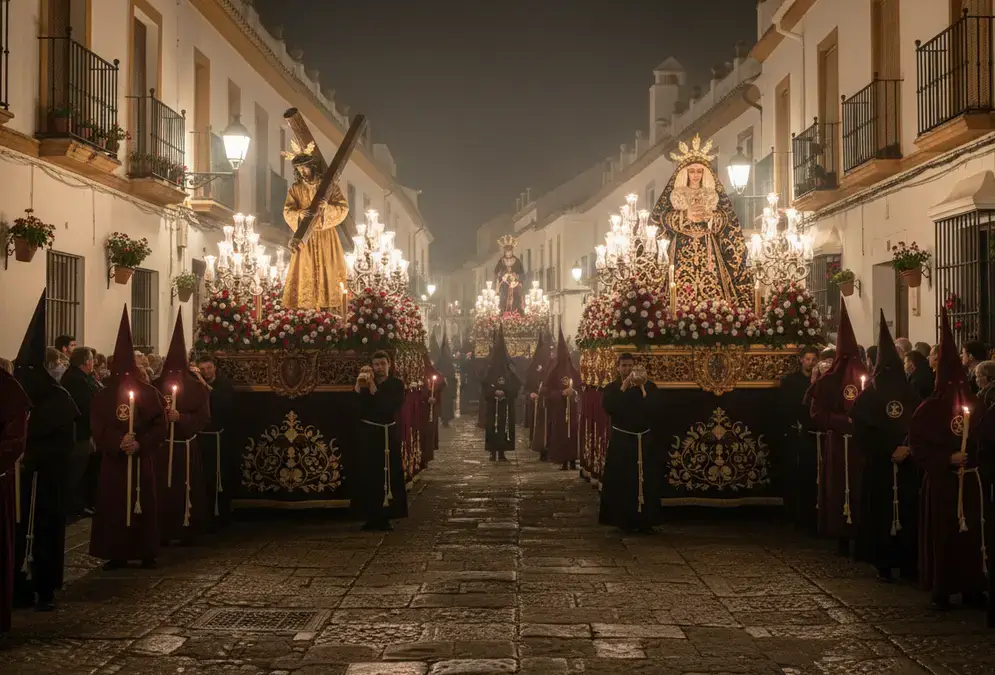
Holy Week in Córdoba (Semana Santa) is not a tourist spectacle — it is a live expression of faith that has unfolded in these streets every year since the 16th century. Unlike Seville, where the atmosphere is festive with applause and oles, Córdoba holds reverence and silence as its defining qualities. When a paso passes, you hear the creak of the float, the low beat of drums, and nothing else.
Thirty-eight brotherhoods (hermandades or cofradías) process from their home churches to the Mezquita-Catedral, creating tableaux unique in the world: baroque floats laden with gilded sculptures passing beneath the horseshoe arches of the most iconic Islamic monument in the Western world. This visual collision of Christian heritage and Islamic architecture is found nowhere else on earth — it is Córdoba's alone. Twenty-five thousand participants. One Madrugada that nobody forgets.
Holy Week vocabulary
- Hermandad / Cofradia
- Religious brotherhood that organizes the procession. Each has its own colors, history, and identity.
- Paso
- The processional throne or float carrying the sacred sculptures. Weight: up to 2 tonnes. Often decorated with flowers, candles, and baroque silverwork.
- Nazareno
- A hooded penitent wearing the brotherhood's tunic. Anonymity symbolizes equality before God.
- Costalero
- The bearer who carries the paso. He walks under the float with outstretched arms, invisible to the crowd. Intense physical effort; perfect synchronization required.
- Saeta
- A sacred flamenco song, sung spontaneously from a balcony as a procession passes below. A moment of intense emotion.
- Carrera Oficial
- The official route that all processions must follow, passing in front of the Mezquita-Catedral.
Good Friday · Midnight to 5:20am
La Madrugada: the moment everyone remembers
La Madrugada — the early hours of Good Friday — is the most solemn and mystical moment of Córdoba's Holy Week. At the stroke of midnight, in absolute silence broken only by the low beat of drums, the Hermandad de la Buena Muerte (Brotherhood of the Good Death) conducts its nocturnal procession through streets that smell of incense and candle wax.
A military brotherhood founded in 1953, it is composed of soldiers and officers of the Spanish army. The penitents wear black tunics as a symbol of mourning. The Cristo de la Buena Muerte, an 18th-century sculpture, is carried by military costaleros through the medieval streets. The procession runs until 5:20am.
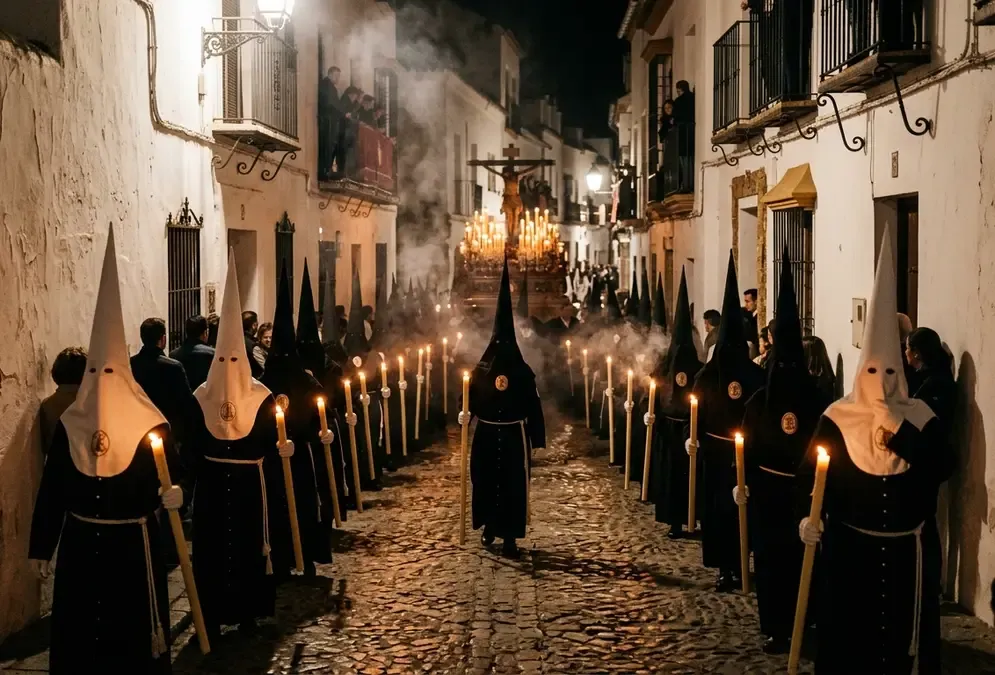
La Madrugada — candlelight, incense, and absolute silence in the medieval streets
Strict rules of La Madrugada
- ✕ Absolute silence — no talking, whispering, or noise of any kind
- ✕ No camera flash — it disrupts the solemnity
- ✕ Do not applaud — considered sacrilegious during La Madrugada
- ✕ Phones on silent — a ringtone is a public embarrassment
- ✕ Do not drink alcohol visibly
Tips for experiencing La Madrugada
- ✓ Arrive on Calle Cardenal Herrero around 11pm to secure a good spot
- ✓ Bring a warm jacket — temperatures drop to 6–8°C between midnight and 5:20am
- ✓ No bars open at that hour: bring a flask of coffee or tea
- ✓ Camera set to high ISO (1600–3200) — no flash
- ✓ Plan your walk home before midnight; taxis are scarce at 5am
"I'm not religious, but La Madrugada shook me to the core. That absolute silence in the medieval alleyways, broken only by the low beat of drums and the sound of footsteps on cobblestones... When the paso passed just a few centimeters away from me near the Mezquita, lit only by candlelight, I had goosebumps. It's a spiritual experience I can't really put into words."
Watch the processions
Get a feel for the candlelight, the drums, and the pasos squeezing through narrow medieval streets — before you experience it yourself.
Semana Santa en Córdoba — official promo
Jesús Nazareno Rescatado en Vía Crucis
Gracia y Amparo — revirá a Ángel de Saavedra
Jesús de los Reyes por la calle San Fernando
Los legionarios junto a la Caridad — Jueves Santo
Salud de Puerta Nueva — revirá en Fernán Pérez de Oliva
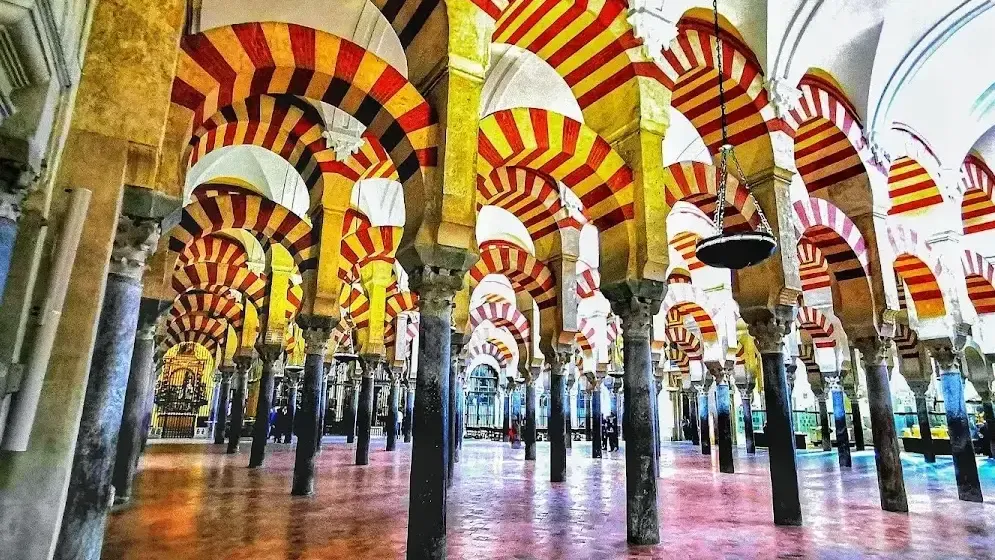
The Mezquita-Catedral — the majestic backdrop to Córdoba's Semana Santa processions
3
Complete procession schedule — all 38 brotherhoods
Official 2026 programme from the Agrupación de Hermandades y Cofradías de Córdoba. Select a day to see departure times, Carrera Oficial passage times, and home church for each brotherhood.
La O and Lágrimas both process through the Av. Blas Infante and Av. Mediterráneo corridors, well outside the historic center. Two brotherhoods, a modest crowd, attended largely by residents from those neighborhoods — the week's quietest evening by design.
| Brotherhood | Departure | Carrera Oficial |
|---|---|---|
| La O peripheral Processes in Fátima neighborhood (Plaza Mahatma Gandhi area) — not historic center | 18:00 | ~22:50 |
| Lágrimas peripheral Processes in Ollerías / Plaza Marina Española area — not historic center | 19:00 | — |
Next Year · March 28 – April 4, 2027
Plan your 2027 visit now
Easter 2027 falls on April 4, so Holy Week runs March 28 – April 4. The same 38 brotherhoods will process. The same candlelit Madrugada at midnight on Good Friday will draw visitors seeking spiritual depth.
Reserve now for 2027: Hotels book up 6–12 months in advance. If you're planning a visit, secure your accommodation by October 2026. Book the Tribuna Real (grandstand) in advance through turismodecordoba.org. Save this guide and refer to it in autumn 2026 when planning begins.
4
Procession map — where to find each brotherhood
Each marker shows a brotherhood's departure church. Filter by day or view all. The gold marker is the Mezquita-Catedral — all brotherhoods pass through the Carrera Oficial in front of it. Blue markers are recommended viewing spots.
Carrera Oficial (Mezquita)
Best viewing spots
Departure churches (colored by day)
Map data © OpenStreetMap contributors
5
Best spots to watch the processions
These are the spots locals fight for. All are marked on the procession map above as blue markers.
Variable depending on the brotherhood
Best spot Mezquita-Cathedral (Carrera Oficial)
Central point of all processions. In 2026, no brotherhood may begin or end its procession here — but all pass through the official route in front of the Puerta del Perdón and Patio de los Naranjos. Arrive two hours early for a decent standing position.
Anytime between processions
Calleja de las Flores
Iconic alley with a view of the Mezquita tower. Processions do not pass through here, but it is steps from the Carrera Oficial and worth visiting for atmosphere and photography between processions.
Variable depending on routes
Puente Romano
Illuminated Roman Bridge, a spectacular setting for evening processions. Open view over the Guadalquivir and the Torre de la Calahorra. Less crowded than the centre — worth positioning here for the Descendimiento on Holy Tuesday.
During all processions on the official route
Puerta del Puente (accessible platforms)
Two adapted viewing platforms near the Puerta del Puente, each holding around 100 people. Reserved for visitors with mobility challenges. Book in advance through turismodecordoba.org.
8:00–10:00 pm for certain brotherhoods
Plaza del Potro
Picturesque square in the historic quarter. Authentic local atmosphere, fewer tourists. Several bars with terraces where you can watch processions pass.
Variable, notably during the Madrugada
Plaza de Capuchinos (Cristo de los Faroles)
Facing the famous Cristo de los Faroles, an iconic symbol of Córdoba's Holy Week. The Madrugada passes through here — less touristy than the centre, and the lantern-lit square gives it a particular atmosphere at that hour.
Start and end of processions from these quarters
San Lorenzo - Santa Marina (off-centre)
Traditional neighbourhoods where several brotherhoods begin their routes — including the Resurrección, which departs from Santa Marina on Easter Sunday. No tourists. The most direct way to experience Holy Week as a resident rather than a visitor.
Paid grandstands (tribunas)
The Tribuna Real, set up in front of the Mezquita, offers seated places with a guaranteed front-on view of the processions as they pass. Ideal for people with reduced mobility or families with children.
Tribuna prices (check turismodecordoba.org for current year):
- · Standard grandstand: €15 (Palm Sunday, Monday, Tuesday)
- · Premium grandstand: €25 (Thursday, Good Friday afternoon, Saturday)
- · VIP grandstand: €30 (prime view + cushion)
Remaining availability: turismodecordoba.org — last-minute seats may still be available, though supply is tight.
For the Mezquita stretch, arrive at Calle Cardenal Herrero at least 30 minutes before the first Carrera Oficial passage. The Roman Bridge at dusk is a quieter alternative with excellent views.
6
Key monuments of Holy Week
The processions pass through Córdoba's most iconic monuments, creating striking tableaux where Islamic heritage and Christian baroque meet.
Mezquita-Catedral
A compulsory stop for all processions. The pasos cross the Patio de los Naranjos beneath the horseshoe arches.
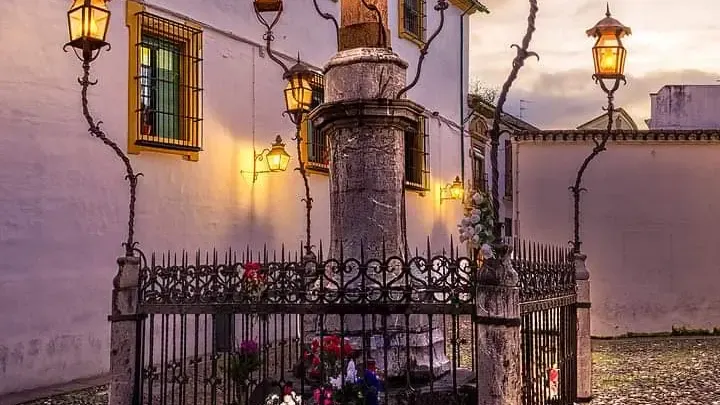
Cristo de los Faroles
The emblematic monument at Plaza de Capuchinos. A key stop on La Madrugada route.
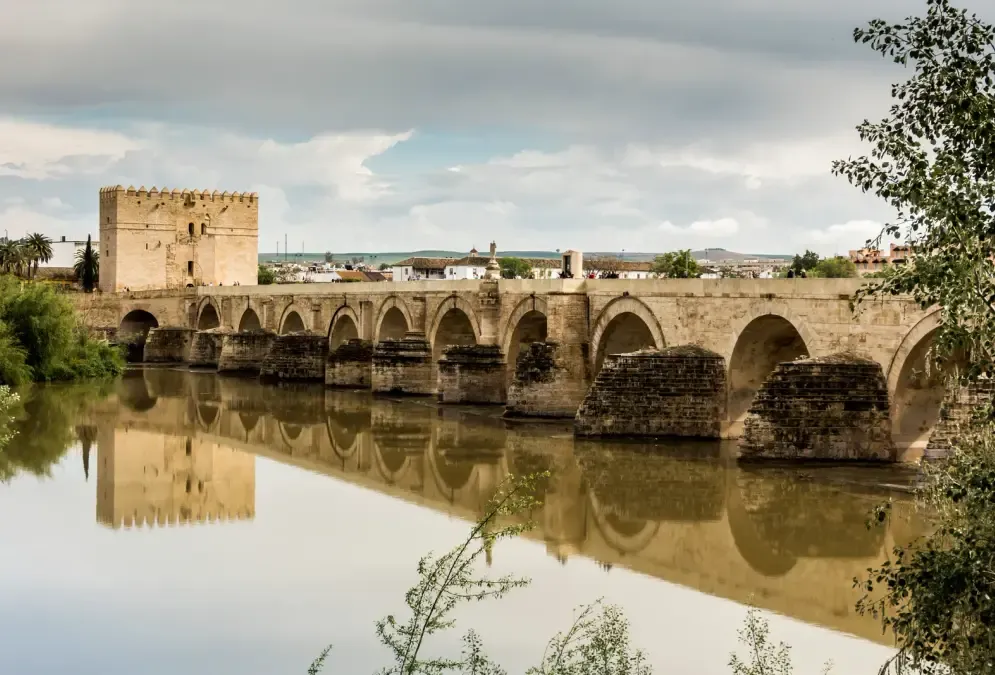
Roman Bridge
Candlelit night processions crossing this 2,000-year-old bridge over the Guadalquivir.
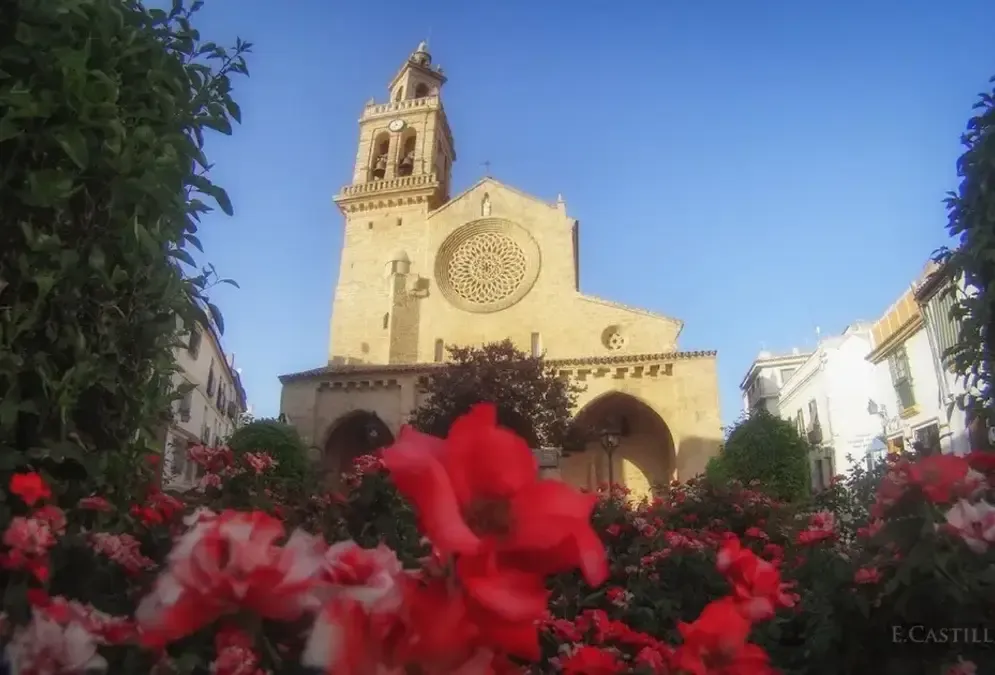
Church of San Lorenzo
Departure point for several brotherhoods. Remarkable Mudejar architecture and local atmosphere.
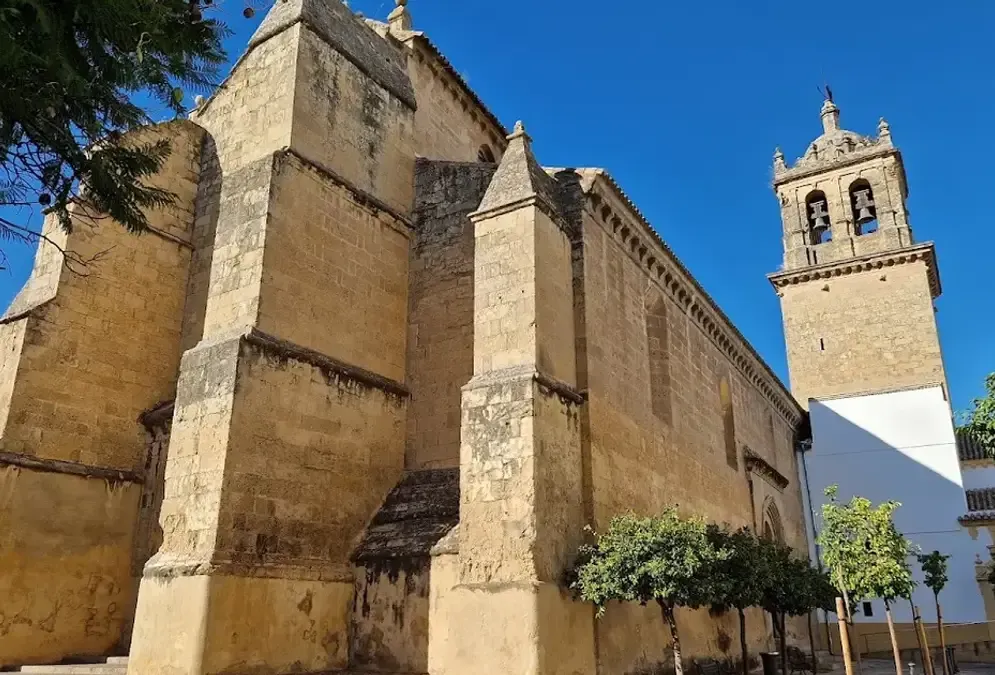
Church of Santa Marina
A working-class neighborhood church where brotherhoods begin. Intense popular devotion, off the tourist trail.
Plaza de Capuchinos and the Cristo de los Faroles — where silence is deepest during La Madrugada
7
Photography tips
Technical settings
- ISO: 1600–3200 for night processions
- Aperture: f/2.8 or wider if possible (low light)
- Shutter speed: 1/125s minimum to freeze motion
- White balance: Tungsten or Kelvin ~3200K for candlelight
- Flash: NEVER — disrespectful and technically useless in this context
Best shots and moments
- Narrow streets near the Mezquita: Pasos squeeze through tight alleyways — extreme close-up shots
- Roman Bridge at dusk: Wide landscapes with sky reflection in the Guadalquivir
- Madrugada: Long exposure for light trails from candles (tripod essential)
- Saeta moment: Look up — the singer on the balcony is often the most powerful image
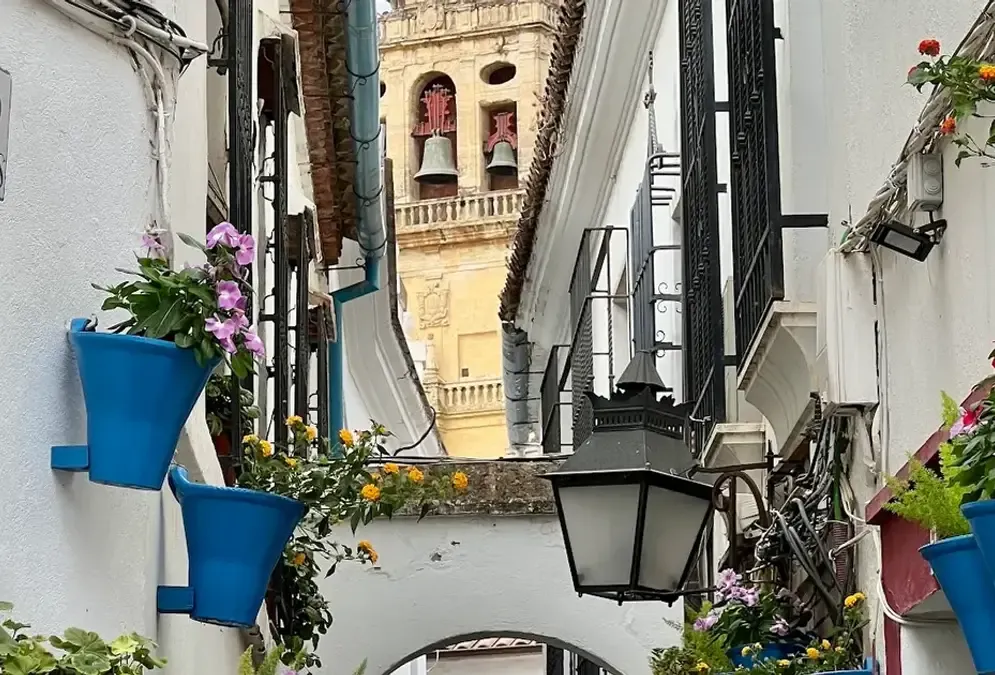
The Calleja de las Flores — a quiet escape between processions, steps from the Carrera Oficial
8
Etiquette and customs
DO
- ✓ Stay silent and respectful during processions
- ✓ Let locals through who are following "their" brotherhood
- ✓ Listen to the saetas in silence; applaud discreetly afterwards
- ✓ Wait for a procession to pass completely before crossing
- ✓ Dress modestly (avoid very short shorts or sleeveless tops)
- ✓ Arrive early for a good spot (at least 2 hours before)
- ✓ Bring a warm jacket for La Madrugada
AVOID
- ✕ Applauding during La Madrugada (sacrilegious)
- ✕ Using camera flash (especially at night)
- ✕ Touching the pasos, nazarenos, or their tunics
- ✕ Cutting across a procession (wait for it to end)
- ✕ Drinking alcohol visibly in the street
- ✕ Speaking loudly or shouting during the passage
- ✕ Standing under balconies (candle wax drips)
- ✕ Making dismissive comparisons with Seville
Understanding local devotion
For Córdobans, Holy Week is not a spectacle — it is a family expression of faith. Many have followed their neighborhood's brotherhood since childhood, marched as nazarenos, or have family members who are costaleros. If a local corrects you (for silence, not crossing, etc.), they are protecting the solemnity of a sacred moment. Accept it with humility.
9
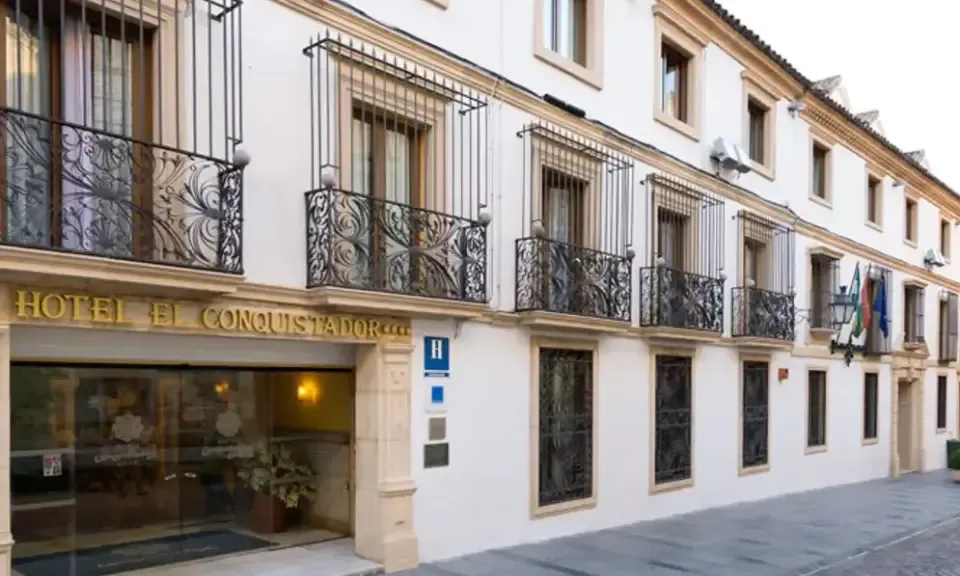
Where to stay during Holy Week
Holy Week accommodation in Córdoba is in short supply. Hotels in the Judería and historic centre fill up months in advance. Here's how to find a room now.
Best areas to stay
- La Judería: Inside the historic core. Walk to all procession routes. Sells out months ahead.
- Centro (Tendillas area): 10 minutes walk from the Mezquita. More options, less atmospheric.
- Axerquía (north of Mezquita): Quiet neighborhood bordering the route. Several small guesthouses. Often has last-minute availability.
Last-minute options
- · Filter booking platforms for "free cancellation" — check daily for drops
- · Small guesthouses (pensiones) in the Axerquía often don't list on major platforms
- · Day trip from Seville (45 min AVE) works for daytime processions — not for La Madrugada
- · Check for cancellations on Tuesday–Wednesday: some bookings drop when people can't attend
Last-minute accommodation
Advance planning has passed — for remaining nights, use booking platforms filtered to "free cancellation" and check for same-day availability. Small guesthouses near the Axerquía neighborhood (north of the Mezquita) often have rooms that don't sell out as fast as the Judería.
10
Transport and parking
Historic center closed to traffic during processions
The center is pedestrianized during processions, typically from late afternoon each day. Street closures begin around the Mezquita when processions start. Cars parked within the perimeter risk being blocked for several hours. Park on the outskirts and walk in.
Park on the outskirts and walk in. Córdoba is compact — the historic center is walkable from any of the main car parks below.
Recommended car parks
- Parking Centro Comercial Arcangel
950 spaces, 15 min walk from the center. Day rate: €8–12 - Parking Plaza de las Tendillas
City center, 10 min from the Mezquita. Rate: €15–20/day (expensive but central) - Parking Estacion de Autobuses
Bus station, 20 min walk. Cheaper: €6–10/day
Train from Seville or Madrid
Seville -> Córdoba: AVE 45 min, €15–35. Trains run frequently; check last departure time before heading out for the evening processions.
Madrid -> Córdoba: AVE 1h45, €40–70. Several departures per day. See the full train guide.
Córdoba-Central station is a 20-minute walk from the center. Taxis available (€8–10).
The Roman Bridge at dusk — processions crossing the Guadalquivir create a striking spectacle
11
Córdoba vs Seville: which Holy Week should you choose?
| Criterion | Córdoba | Seville |
|---|---|---|
| Atmosphere | Intimate, reverent, silent | Festive, applause, oles |
| Number of brotherhoods | 38 hermandades | 60+ hermandades |
| Setting | Medieval alleyways + Mezquita | Wide avenues + Cathedral |
| Crowds | Moderate, manageable | Very dense, 1 million visitors |
| Accommodation price | x2 (120–250 EUR/night) | x3 or more (200–400 EUR/night) |
| Unique highlight | The silent Madrugada | La Macarena (gypsy fervor) |
| Best for | Authentic spiritual experience | Grand and festive spectacle |
Our take: If you want the most authentic and spiritual experience, Córdoba is the right choice. If you want the grandest spectacle, go to Seville. Both are worth the journey, but Córdoba offers an intimacy and emotional depth that is hard to find anywhere else.
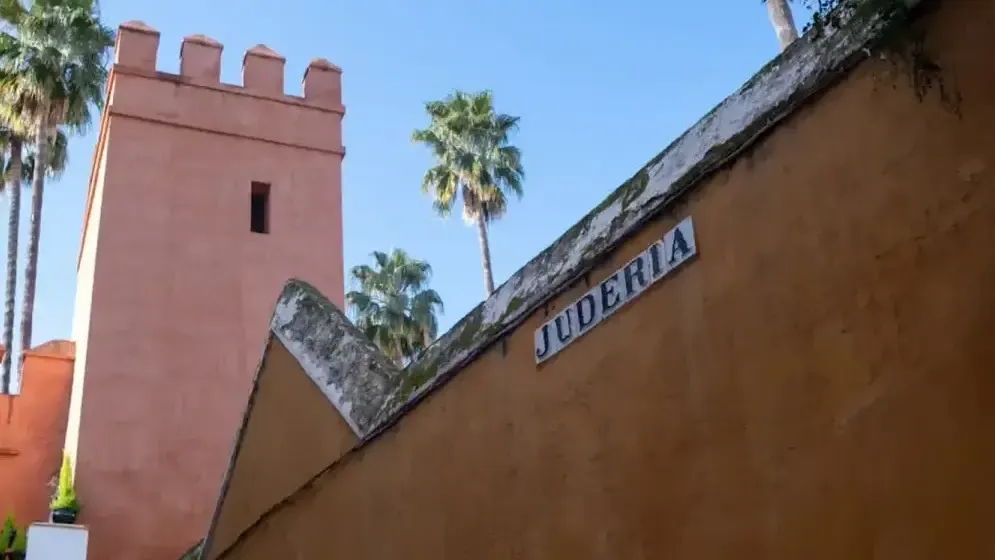
The Judería's medieval lanes — where processions feel closest and the atmosphere most intense
12
Complete practical information
Weather and what to wear
General forecast: Late March / early April temperatures range 14–22°C during the day, dropping to 6–10°C overnight. Rain risk is moderate (~54mm average for April). If rain is forecast, processions may be cancelled — always check hermandadesdecordoba.es before heading out.
Daytime clothing: Jeans or trousers, shirt or t-shirt, light jacket
Evening processions: Pack layers and a light rain jacket. Temperatures fall fast after sunset.
Madrugada clothing: Warm jacket, scarf (temperatures can drop to 6°C between midnight and 5:20am)
Accessibility
Adapted viewing platforms: Two fully accessible platforms at Puerta del Puente, capacity around 100 people. Reserved for visitors with mobility challenges and elderly visitors. Book through turismodecordoba.org.
Blue zones (quiet spaces): Designated low-stimulation areas for visitors with autism spectrum conditions, now expanded to include Cathedral interiors alongside street-level quiet zones.
Crowd management: Around 400 police and firefighter personnel deployed across the route, coordinated through a real-time crowd monitoring center.
Food and dining
Bars and restaurants: Many close or reduce hours during processions (roughly 5pm–11:30pm). Book ahead for lunch (1–3pm) or a late dinner after 11:30pm.
Lenten specialties: Potaje de vigilia (vegetarian chickpea and spinach stew), bacalao (salt cod), torrijas (honey-soaked French toast). Worth trying while you're here.
Tip: Eat a proper lunch — the long procession windows leave you on your feet for hours without many food options.
Real-time information
Official website: hermandadesdecordoba.es
Exact schedules, itineraries, rain cancellations — updated in real time
Mobile app: "Semana Santa Córdoba"
Real-time GPS tracking of processions, push notifications for cancellations, interactive map
Tourist office: turismodecordoba.org
+34 902 201 774
Estimated budget (per person)
Accommodation (3 nights) 360–750 EUR
Food (3 days) 90–150 EUR
Return train from Seville 30–70 EUR
Grandstand seats (optional) 15–30 EUR
TOTAL 495–1,000 EUR
Plan your Holy Week in Córdoba
Check the official website for the latest programme, cancellation updates, and grandstand booking.
Frequently asked questions
When is Holy Week in Córdoba 2027?
Holy Week (Semana Santa) will run from Palm Sunday 28 March to Easter Sunday 4 April 2027. Processions take place every day, with the most concentrated action on Holy Thursday (6 brotherhoods processing) and La Madrugada on Good Friday (midnight to 5:20am). Dates shift each year according to Easter.
Should I book grandstand seats (tribunas) for the processions?
The processions are free to watch from the street, but grandstand seats near the Mezquita-Cathedral cost €15–30 depending on the day — Holy Thursday and Good Friday afternoon command €25–30. Tribunas are worth booking for La Madrugada (reserved seating means you see the Cristo pass at eye level rather than over shoulders) and for families with young children who need secure sightlines. Book through turismodecordoba.org from February onward; last-minute availability is limited.
What is La Madrugada?
La Madrugada is the most solemn moment of Córdoba's Holy Week — a nocturnal procession on Good Friday from midnight to 5:20am. The Brotherhood of the Good Death carries the Cristo de la Buena Muerte through the medieval streets in absolute silence. Rules are strict and enforced: no talking, no flash photography, no applause. Arrive on Calle Cardenal Herrero by 11pm to find a decent spot.
What accessibility features are available during Holy Week?
Two fully adapted viewing platforms at Puerta del Puente accommodate around 100 people with mobility challenges or elderly visitors — reserved seating with clear sightlines to the procession route. Expanded "blue zones" (quiet spaces for visitors with autism spectrum conditions) include Cathedral interiors as well as designated street areas. Contact turismodecordoba.org for platform reservations; capacity is limited so call early.
How does Córdoba's Holy Week compare to Seville's?
Córdoba's Semana Santa is more intimate and reverent — 38 brotherhoods vs Seville's 60+, moderate crowds vs over a million visitors, and a genuinely solemn atmosphere. The processions pass through narrow medieval streets and under the arches of the Mezquita, a backdrop that simply does not exist anywhere else in Spain.
How should I plan accommodation for Holy Week?
Book accommodation as early as possible — Holy Thursday and Good Friday nights sell out first, often 6–12 months in advance. The Judería (historic quarter) offers the most atmospheric experience, but the Tendillas area (modern centre, 10 minutes away) has more availability. If full accommodation is unavailable, day trips from Seville work for daytime processions — but you will miss La Madrugada, which requires an overnight stay.
If it rains, are processions cancelled?
Yes — rain cancels processions. Brotherhoods decide on the day, typically a few hours before departure. Check hermandadesdecordoba.es or the 'Semana Santa Córdoba' mobile app for real-time status. The app sends push notifications when a brotherhood cancels or adjusts its route.
Further reading
Official sources
- Ayuntamiento de Córdoba — Semana Santa (opens in a new tab)
Official Córdoba City Council website with the official programme
- Córdoba Tourism Office (opens in a new tab)
Official tourist information on Holy Week in Córdoba
- Spain.info — Semana Santa (opens in a new tab)
Official Spanish tourism guide to Easter traditions
- ElDiario.es — Semana Santa Córdoba (opens in a new tab)
Media coverage and news on the processions
Book tours & activities in Córdoba
Tours are selected for quality, not commission. We earn a small fee if you book — at no extra cost to you.
Guided tours, skip-the-line tickets, and bookable experiences — browse everything available in Córdoba.