
What makes Córdoba's salmorejo different
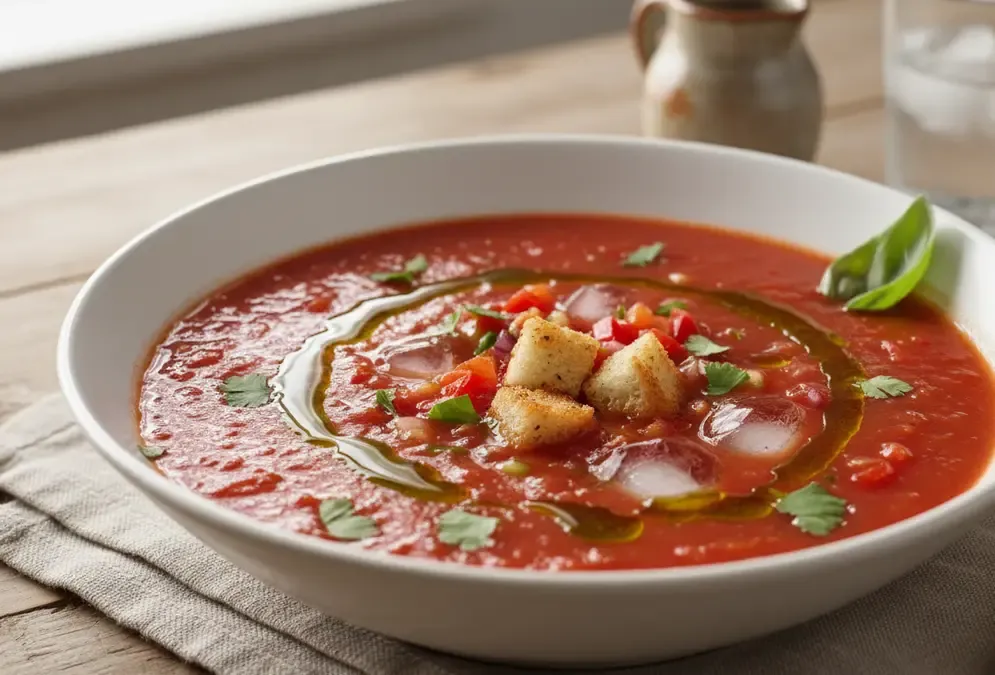
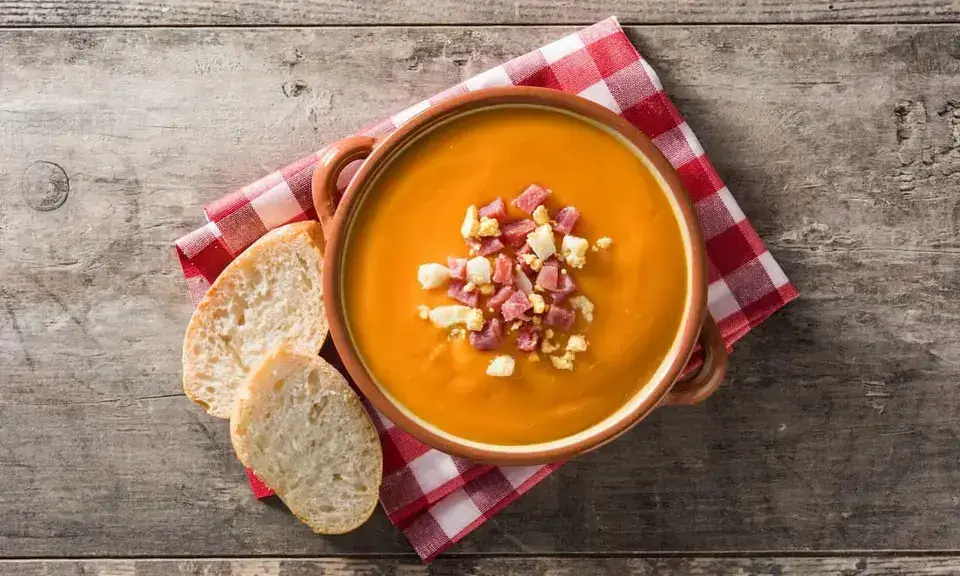
The texture is closer to a cold purée than a soup. So thick that a spoon stands in it. Five ingredients: ripe tomatoes, stale white bread, garlic, extra-virgin olive oil (Córdoba province produces more of it than most countries — the tasting tours make the difference between varieties clear), and salt. No peppers, no cucumber. The classic finish is diced hard-boiled egg and shaved serrano ham on top, which adds crunch and salt against the smooth base.
This is the dish locals order first. If a bar gets the salmorejo wrong, nothing else on the menu inspires confidence.
Salmorejo vs. gazpacho: the key differences
Salmorejo and gazpacho share cold tomatoes as a base, but they are distinct dishes with separate origins and traditions. The confusion is understandable, but the differences are substantial.
Ingredients: Salmorejo uses five things and five only — tomatoes, bread, garlic, olive oil, salt. Gazpacho is more elaborate: tomatoes, bell peppers, cucumber, onion, and vinegar are standard. No vinegar in salmorejo. No peppers or cucumber either.
Texture: Salmorejo is thick, creamy, almost a spread. You can stand a spoon in it. Gazpacho is liquid enough to drink from a glass — more soup than salmorejo's purée.
Bread matters: Salmorejo relies on bread for body. A proper salmorejo is roughly equal parts bread and tomato by weight. Gazpacho uses less bread or none at all. The bread is what gives salmorejo its velvety texture.
Temperature: Both are served cold, but salmorejo is typically 8–10°C (still quite cool). Gazpacho is ice-cold, sometimes nearly slushy.
The toppings: Salmorejo wears a crown of diced hard-boiled egg and shaved serrano ham. These garnishes add textural contrast. Gazpacho, when garnished at all, gets diced raw vegetables or breadcrumbs.
Geography and tradition: Salmorejo is specific to Córdoba. Gazpacho belongs to Andalusia more broadly and is most associated with Seville. You won't find a proper salmorejo outside Córdoba; gazpacho has traveled.
A Córdoba original
The recipe traces back 2,000 years — from Roman moretum through Moorish mazamorra to the tomato emulsion Córdoba refined after the Columbian Exchange. Tomatoes arrived from the Americas in the 16th century and transformed the dish entirely. What had been a peasant staple became something specific to Córdoba — distinct from Seville's gazpacho, different from Antequera's porra, and not replicated well anywhere else.
When and how to eat it
Order it between May and September when Andalusian tomatoes are at their peak. Served at 8–10°C, ideally in an earthenware bowl. It pairs cleanly with a chilled Montilla-Moriles fino — the dryness cuts the oil without overwhelming the tomato. A rebujito works at festivals. Skip it in the dead of winter when off-season tomatoes flatten the flavour.
Where to eat salmorejo in Córdoba
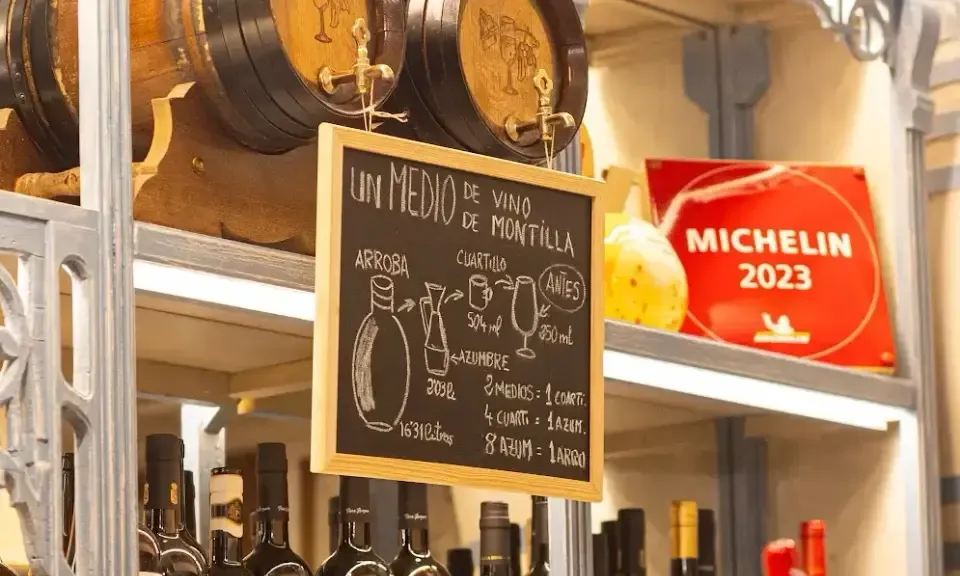
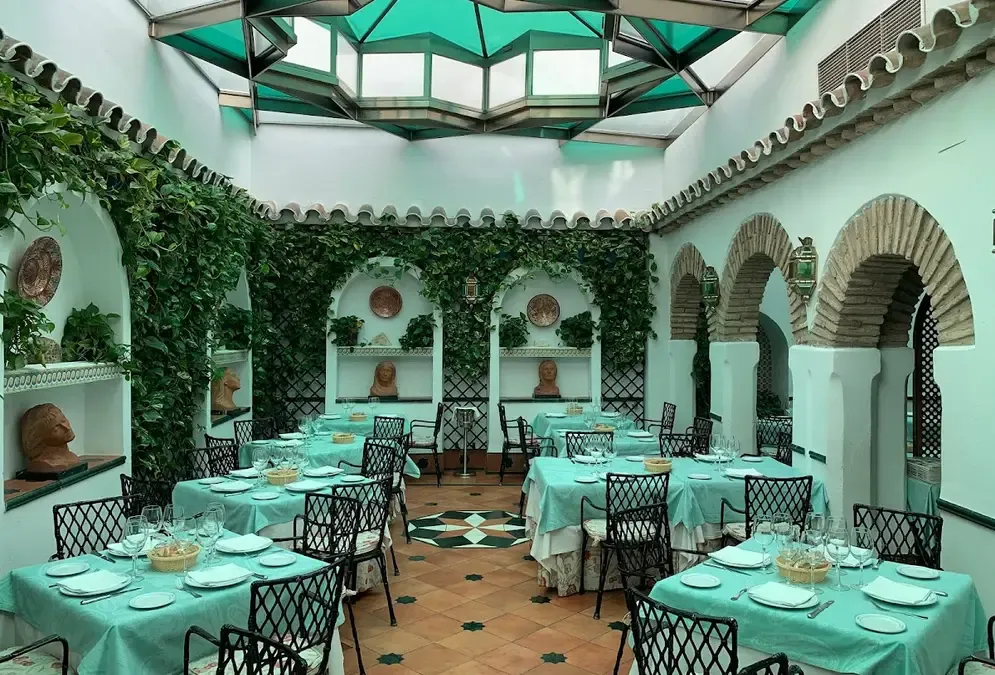
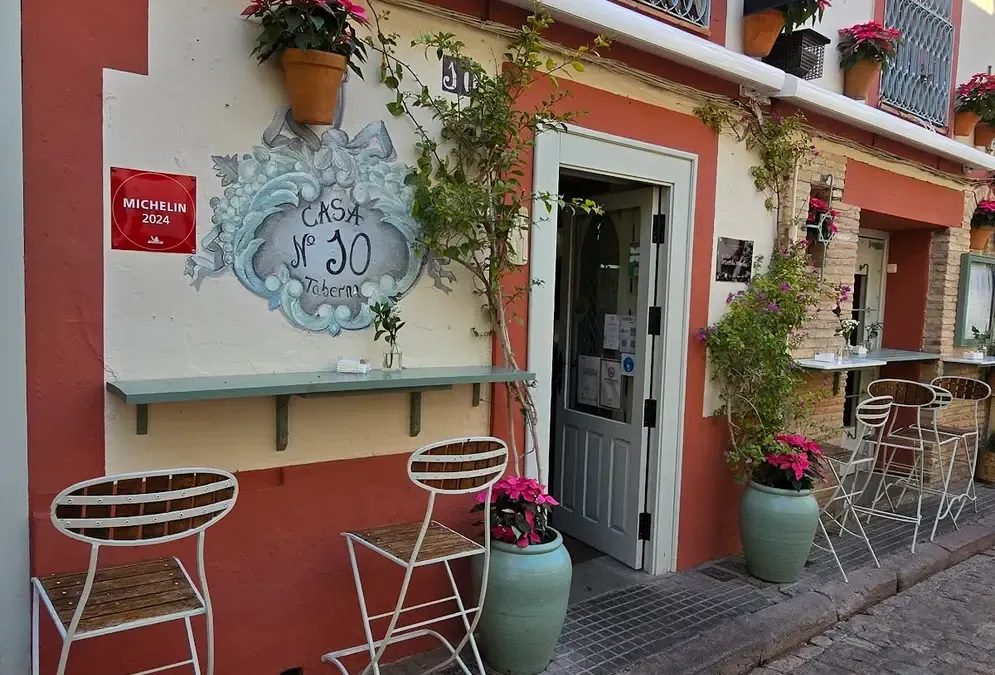
Practically every bar in the city serves salmorejo, but quality varies significantly. Taberna Salinas in the historic centre makes versions closest to the traditional recipe without shortcuts — the egg and ham garnish are generous, the texture is properly thick. Bodegas Campos nearby also delivers the classic version, and its wine selection makes it a natural pairing destination.
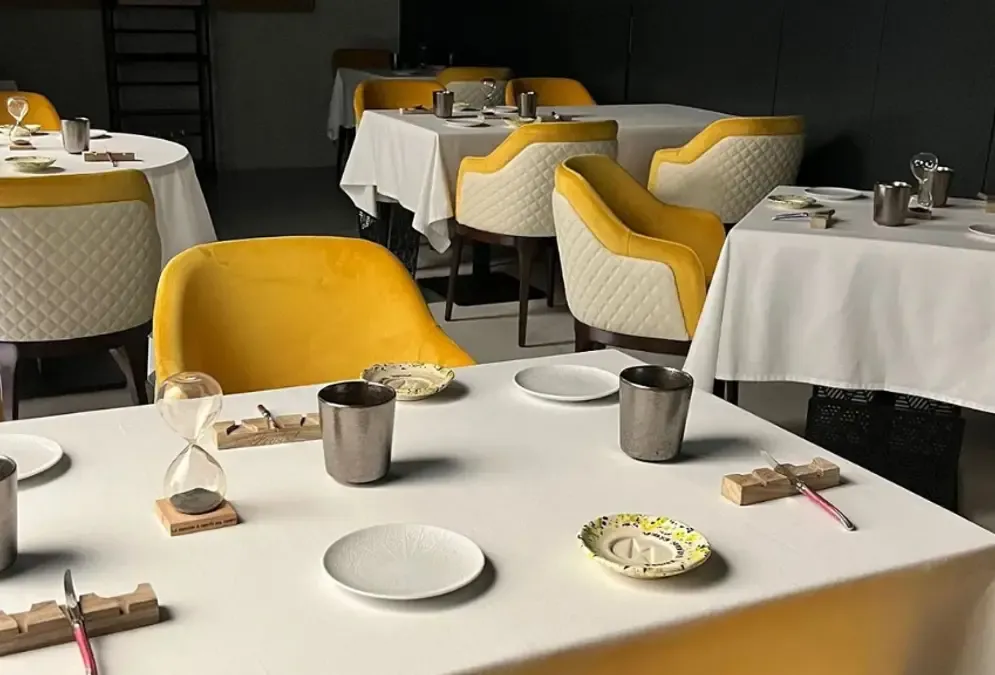
In the Jewish Quarter, Bodegas Mezquita serves a reliable salmorejo from a 17th-century bodega, while Casa Pepe de la Judería offers a warm-weather interpretation that leans into tomato ripeness. If you want to see how a Michelin-starred kitchen handles the dish, Noor puts salmorejo on the menu with contemporary technique but genuine respect for the original — texture is still thick, seasonality still matters, and the garnish is still there.
Near the Mosque-Cathedral, El Churrasco serves a classic version without pretension. Garum 2.1 and Recomiendo deliver solid interpretations worth seeking out if you're exploring different neighbourhoods.
To deepen your understanding, the Córdoba gastronomic tour includes a guided tasting with commentary on what distinguishes a proper salmorejo from the tourist-trap version. To learn how to make it yourself, the cooking class at a city-centre winery covers the full preparation — technique, texture, and the quality indicators that separate a good salmorejo from an indifferent one. Salmorejo leads our Must-Try Dishes in Córdoba and appears in the Top 15 Highlights of Córdoba — both guides are useful companions to a first visit. You can also find quality salmorejo ingredients — Córdoba olive oil, ripe tomatoes — at the stalls covered in the food markets guide.