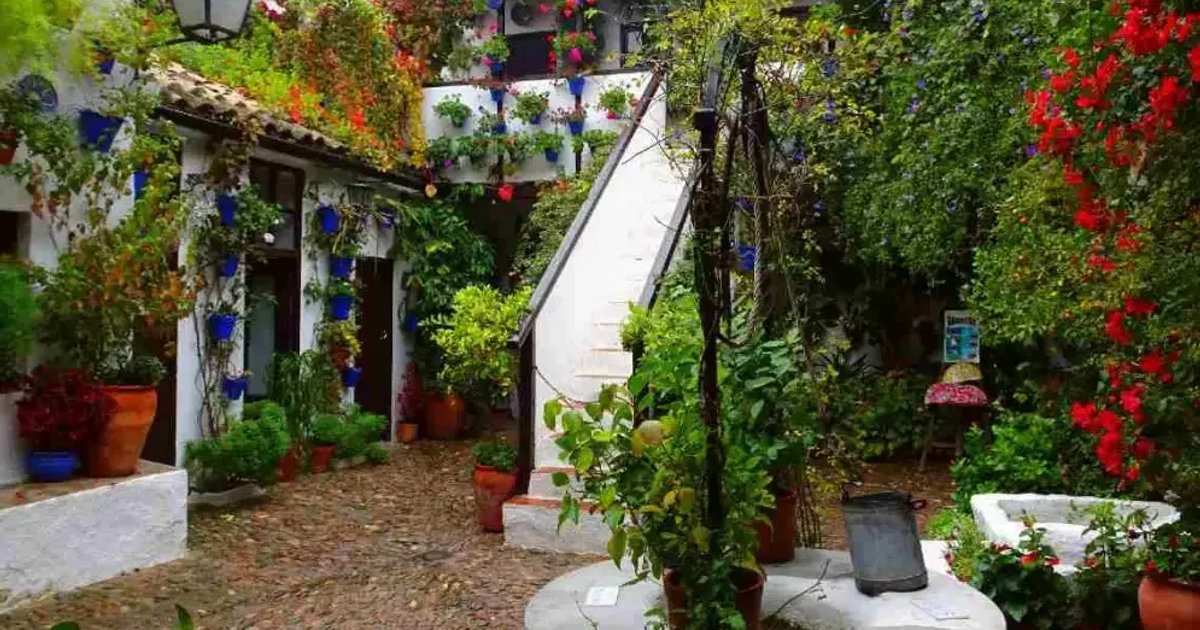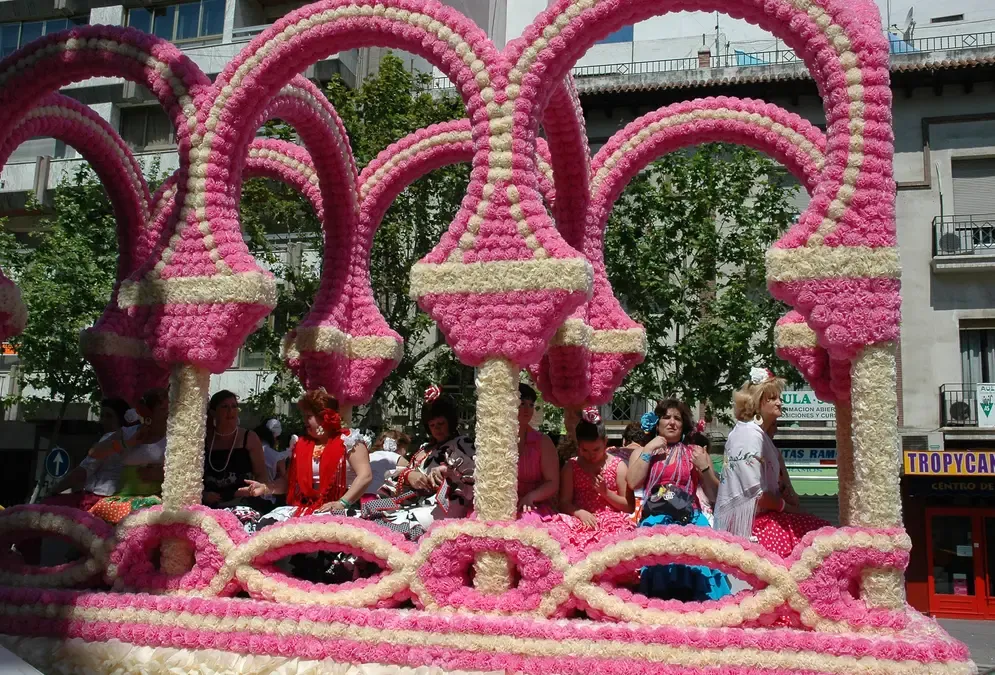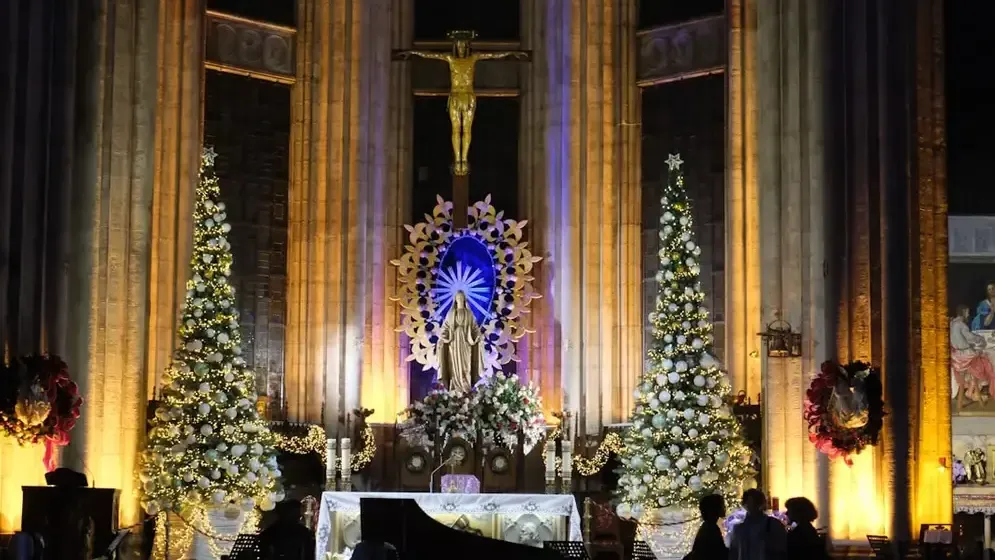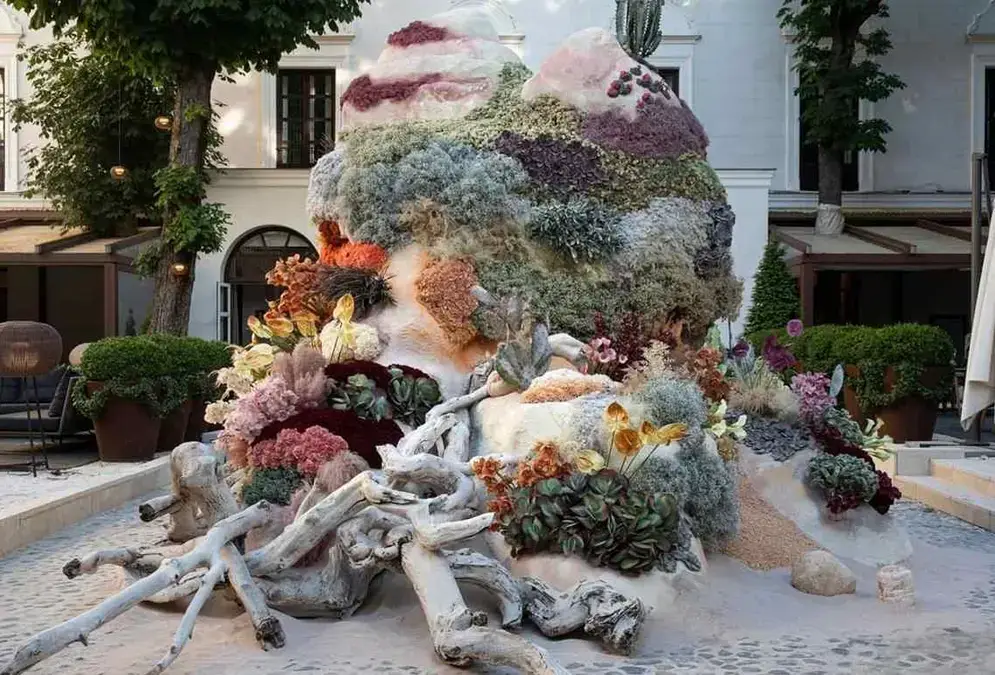

FLORA is Córdoba's autumn showcase for contemporary floral art. Founded in 2017 by Zizai Cultura, this annual festival takes the city's historic patios and palaces and hands them over to five international floral artists who create monumental ephemeral installations in dialogue with centuries-old Andalusian architecture. The results are genuinely surprising — nothing like the floral tourism you might expect.
What makes this festival different
The five artists are in competition. Each designs a unique installation in a heritage site, competing for what the floral art world calls "the Oscars of flowers" — an internationally recognised award in the field. The winners have included artists from Japan, the Netherlands, Belgium and South Korea. In 2023 the event generated €16.4 million in economic impact for the city, which says something about how seriously it's taken.
Five heritage venues transformed
The installations appear in spaces where the contrast between contemporary art and old stone is the whole point. The Palacio de la Merced hosts a major creation in its inner courtyards. The Patio de los Naranjos (Mezquita-Cathedral) puts contemporary work in the middle of a medieval Islamic monument. The Palacio de Viana, already famous for its twelve patios, becomes the backdrop for more botanical work. Two additional heritage spaces complete the circuit.
What you actually see
The installations are large-scale — we're talking structures that fill entire courtyards, thousands of stems arranged with architectural precision, materials that range from fresh flowers to dried plants to botanical photographs projected onto stone walls. Each artist brings a distinct national tradition in floral design, so the five installations look nothing like each other. The Japanese approach tends toward restraint and negative space; the Dutch toward abundance and colour engineering; the Korean toward the conceptual. The juxtaposition with medieval Islamic and Baroque Christian architecture is not accidental — the artists respond to the specific buildings they're given.
October light in Córdoba — low angle, golden afternoon quality — does the installations a favour that midsummer sun wouldn't.
Nearly 100 free activities
Beyond the installations, FLORA runs floral art workshops, talks on botany and plant design, dance shows and artistic performances, technical demonstrations by the artists. Everything is free and open to everyone — part of a deliberate policy to make contemporary art accessible in the spirit of Córdoba's Patios tradition.
Planning your visit
The five installations are accessible from 11:00 to 20:00 for 10 to 12 days in mid-October. Free entry for everything. Weekday mornings are quieter than weekends. Allow 2 to 3 hours for the full circuit of five venues.
Combine with a walk through the Judería and San Basilio, where the flower-filled patios provide a living backdrop to the contemporary work. The festival falls during Spanish school holidays, so expect crowds at midday.