Search the site

history-buffsarchitectureart-loversbudget
Palacio Episcopal de Córdoba
Monument Free with the Mezquita ticket

Palacio Episcopal de Córdoba

Mon–Sat: 9am–6pm (winter) / 9am–7pm (summer). Sun: 8:30am–6pm (winter) / 8:30am–7pm (summer)
La Judería
Back to La Judería

On this page

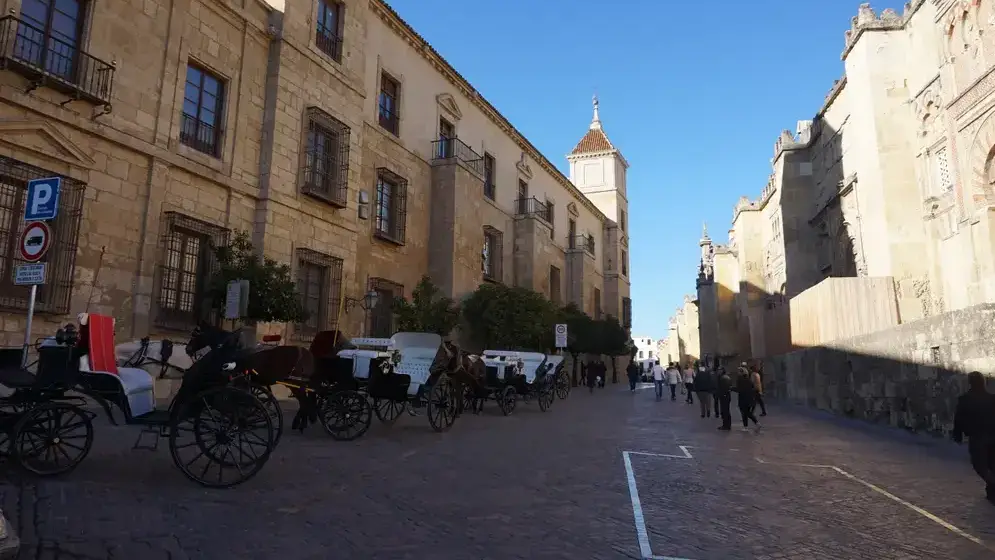
The Palacio Episcopal de Córdoba stands opposite the western façade of the Mezquita, in the Judería. Its centrepiece is a baroque central courtyard with a monumental staircase beneath a polychrome stucco vault — the most ornate interior space in Córdoba that most visitors never bother to enter.

Fourteen Centuries of History on One Site

Built over a 6th-century Visigothic palace, the building was used as a fortress during the Umayyad dynasty before becoming the bishop's residence after the Reconquista of 1236. The current structure layers several periods: Visigothic foundations, Arab elements from the Caliphate era, 15th-century Gothic pointed arches, and baroque additions from the 18th and 19th centuries. If you stand in the courtyard and look carefully, you can read about 1,400 years of Córdoba through the building's walls.

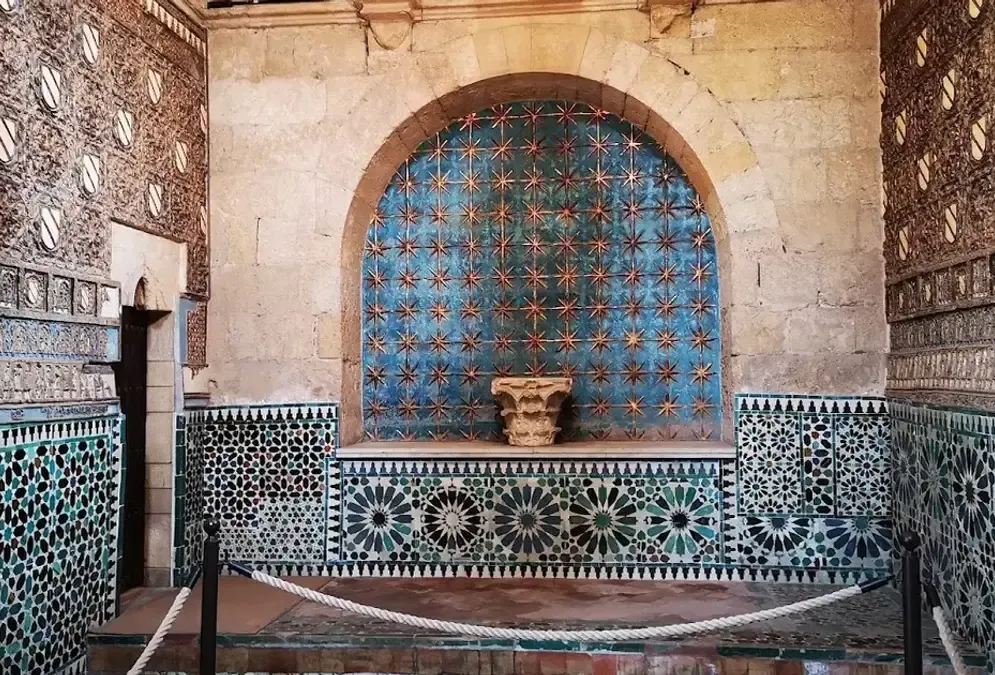
The Visigothic foundations were confirmed by archaeological investigations in the 20th century. Fragments of Visigothic stonework — column capitals and carved panels — are incorporated into the museum displays on the lower level and allow direct comparison with the later Islamic and Christian layers of the building above them.

The Diocesan Museum of Fine Arts

The museum holds works from churches across the diocese: religious sculpture from the 13th to 18th centuries (altarpieces, crucifixes), Spanish paintings from the Sevillian and Cordoban schools, liturgical furniture, illuminated psalm books, and tapestries from the cathedral. The baroque courtyard is as much a reason to visit as the collection.

The polychrome stucco vault above the staircase is the most theatrical interior surface in the building — painted in multiple colours with figurative and architectural motifs, it shows the 18th-century ambition for the palace as both a working episcopal residence and a statement of ecclesiastical prestige. For more art in the city, see our complete guide to Córdoba's museums.

Planning Your Visit

Allow 45 minutes to 1 hour. Free with the Mezquita ticket — the natural next stop after the mosque-cathedral. If you have a guided tour of the Mezquita with skip-the-line access, the same ticket gets you in here.

The palace is a stop on the Three Cultures Route, which uses it to illustrate how the same site passed through Visigothic, Islamic, and Christian hands over fourteen centuries. The museum makes an interesting comparison: the Mezquita shows Islamic art at its peak, the Episcopal Palace shows the Christian religious art that followed in the same city. The Synagogue is 5 minutes away and the Alcázar is 10 minutes. All three cover different chapters of the same neighbourhood's history.
Reporter notebook

Insider tips

Practical observations gathered the way a local journalist would keep them: short, specific, and more useful than brochure copy.

Money tip

Free with your Mezquita ticket — just walk across the street

Most visitors don't realize their Mezquita ticket includes the Episcopal Palace. After the mosque-cathedral, cross the street and enter. The baroque courtyard and polychrome stucco vault are among the most ornate surfaces in Córdoba, seen by almost nobody.

Photo spot

The polychrome stucco vault above the staircase is the most theatrical ceiling in the city

Look up as you climb the monumental staircase. The painted vault with figurative and architectural motifs in multiple colours is an 18th-century showpiece that most visitors to Córdoba never see. The Mezquita gets millions; this gets dozens.

Best time

Visit right after the Mezquita for the perfect Islamic-to-Christian art comparison

The Mezquita shows Islamic art at its peak; the Episcopal Palace shows what Christian religious art looked like in the same city. Visigothic foundations, Gothic arches, baroque additions — 1,400 years of Córdoba in one building. The sequence deepens both visits.

Practical information

Opening hours
Mon–Sat: 9am–6pm (winter) / 9am–7pm (summer). Sun: 8:30am–6pm (winter) / 8:30am–7pm (summer)
Admission
Free with the Mezquita ticket
Address
Palacio Episcopal de Córdoba, Centro, Córdoba, SpainView on Google Maps

Frequently asked questions

Is the Palacio Episcopal de Córdoba free to visit?

Entry to the Palacio Episcopal and its Diocesan Museum of Fine Arts is free with a valid Mezquita-Catedral ticket. There is no additional charge.

What is inside the Palacio Episcopal de Córdoba?

The palace houses the Diocesan Museum of Fine Arts, with religious sculpture, paintings by Spanish masters, liturgical furniture, and illuminated manuscripts from the 13th to 18th centuries. The baroque central courtyard and monumental staircase are highlights.

How old is the Palacio Episcopal de Córdoba?

The site has been occupied for over 1,400 years. Built over a 6th-century Visigothic palace, it was used as a fortress by the Umayyad dynasty before becoming the bishop's residence after the Reconquista in 1236. The current baroque appearance dates mainly from the 18th and 19th centuries.

Walking Tours

Self-guided walking tours that pass by this monument.