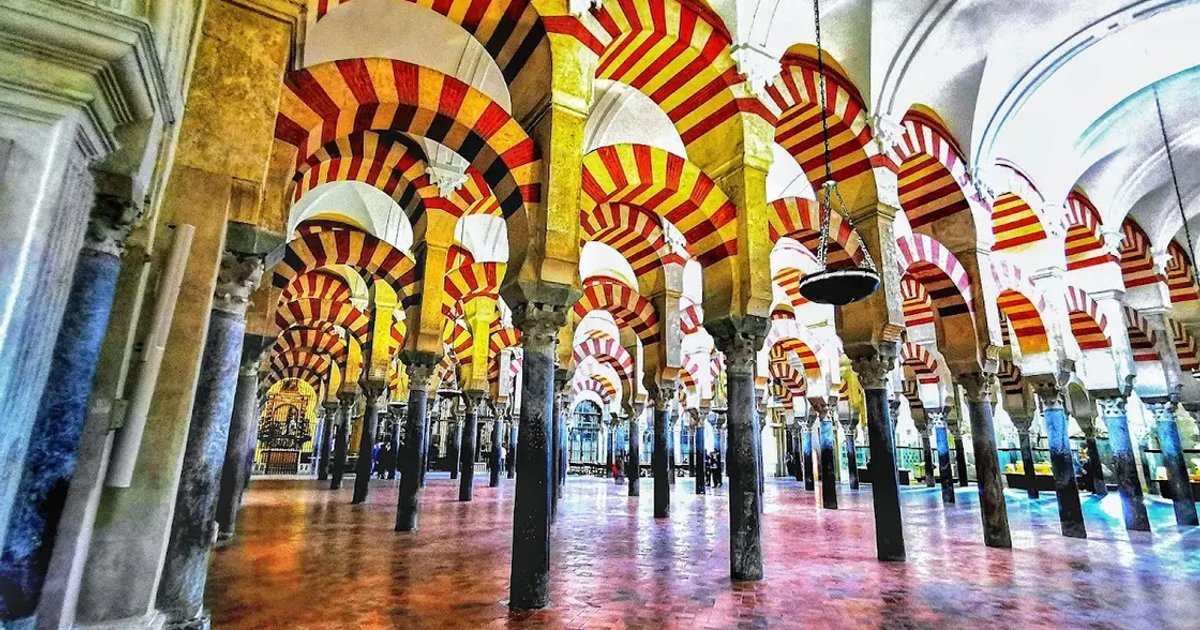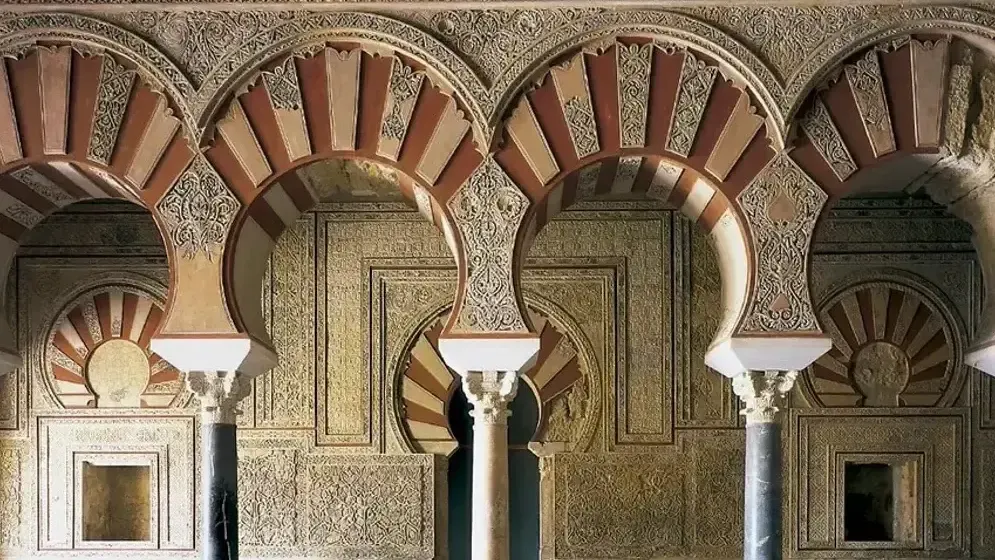

You step from the heat of Calle Cardenal Herrero into sudden cool. The light drops. Your eyes take a moment. Then the 856 columns come into focus — jasper, marble, and granite stretching in every direction, carrying red-and-white horseshoe arches that seem to recede further than the building should allow. The scale breaks your bearings within ten steps. That's the point.
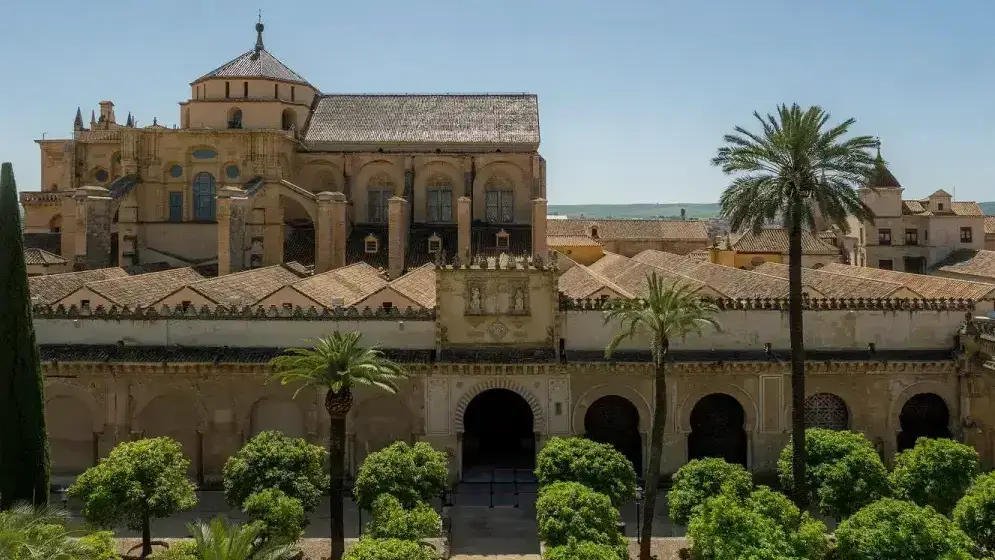
The Mezquita-Catedral de Córdoba holds 1,300 years of Islamic and Christian history in the same walls. It began in 785 when Abd al-Rahman I tore down a Visigothic church on this site and built the first mosque. Four more caliphs expanded it over the next two centuries, each wave of construction visible today in the shifting proportions of the columns and arches. In 1236, Fernando III took Córdoba and consecrated the mosque as a cathedral — though the building's Islamic architecture was left structurally intact for nearly three centuries after that day. The full account of what the 1236 conversion actually changed shows how little was demolished at the time, and how much survived until the 16th century. Then in 1523, Charles V did something that still generates argument: he ordered a Renaissance nave cut into the centre of the prayer hall. When he finally saw the result, he reportedly told the cathedral chapter, "You have destroyed something unique to build something ordinary." Both things are still there. The full account of how that decision was made, who opposed it, and why the famous quote may be apocryphal is in What Charles V Regretted About the Mezquita He Approved.
What to look for inside
The column forest is the first thing and the thing that stays with you longest. The columns were salvaged from earlier Roman and Visigothic structures — they don't match in height, so the architects added a second tier of arches on top to level the ceiling. Stand in the middle and slowly turn. The arches recede in every direction like a mirror held up to another mirror.
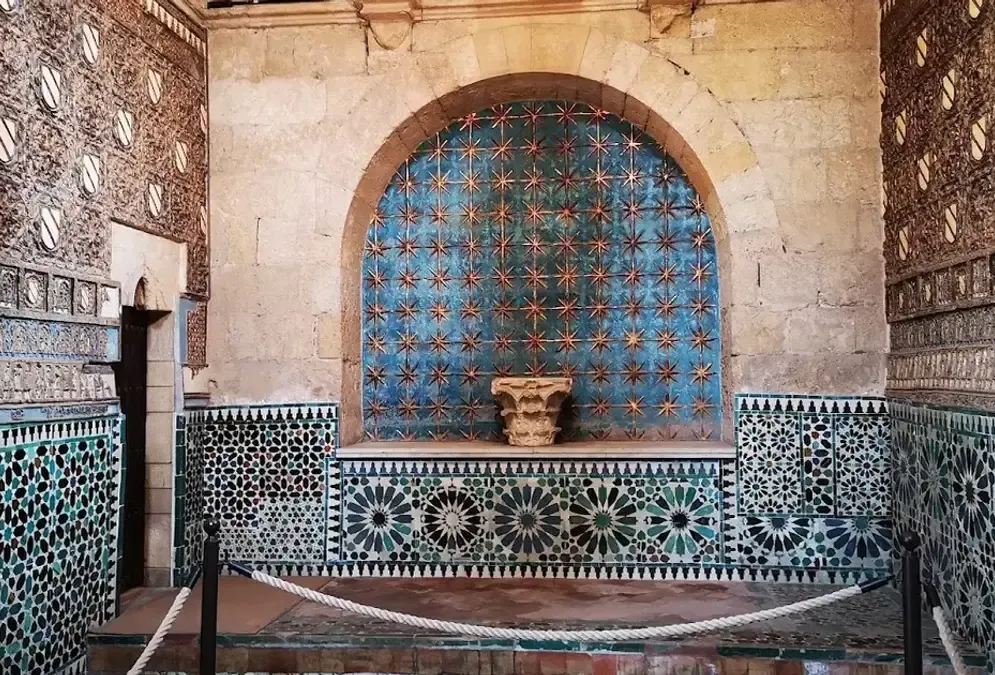
At the far end of the prayer hall, the mihrab faces Mecca. The mosaic work around it was made by craftsmen sent from Constantinople by the Byzantine emperor, at the request of Caliph Al-Hakam II — which makes it, technically, a piece of Byzantine art inside a Spanish mosque. The gold tessera catch the light differently depending on the hour. The Córdoba architecture guide explains how each of the four expansion phases reshaped the prayer hall, and why the mihrab's placement — offset from the building's axis — reflects a deliberate choice by Al-Hakam II rather than a surveying error.
The Renaissance cathedral inserted into the mosque's centre is jarring, exactly as Charles V feared. A high vaulted nave, carved choir stalls, a Baroque retablo — all dropped into the middle of a building whose logic they contradict. Whether this collision is a horror or a wonder is genuinely a matter of opinion. Most people end up thinking both. For the full story of how a mosque became a cathedral — and why the name and ownership are still disputed today — read Is the Mezquita a mosque or a cathedral?.
The cathedral's chapels hold other notable burials: Luis de Góngora, Córdoba's greatest Baroque poet, is buried behind an iron grille on the south side — walked past by most visitors without a second glance.
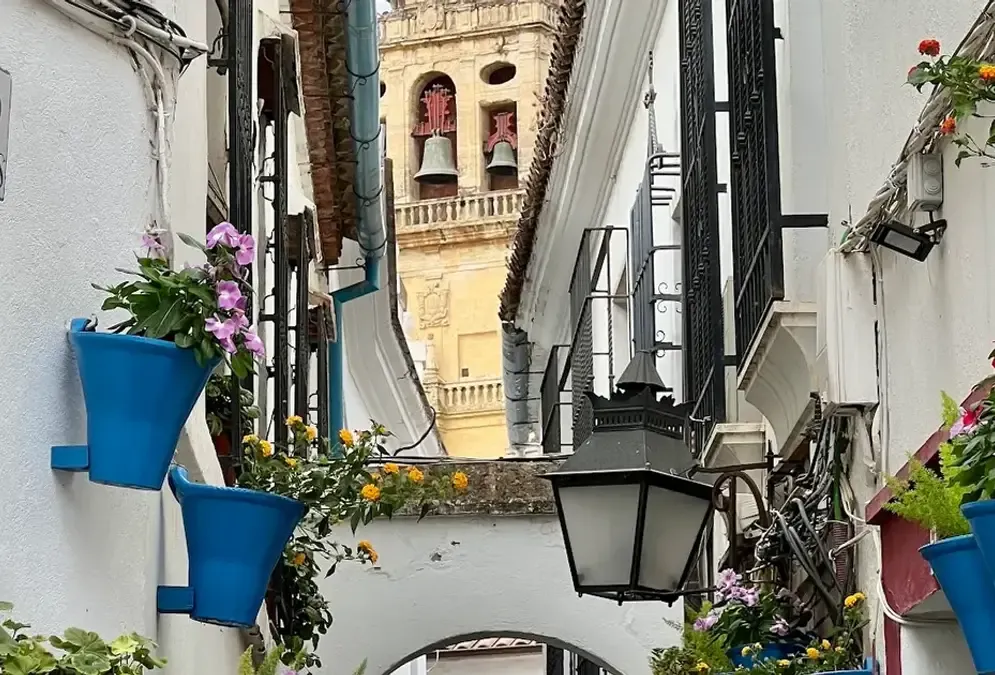
For the overhead view, climb the Torre Campanario bell tower (€4 supplement, guided tours every 30 minutes). The tower was built over the original minaret. From the top, the roofline of the Mezquita spreads below you alongside the old city and, on clear days, the Sierra Morena to the north.
How to visit
Guided tour: To make sense of the architectural layers, book a skip-the-line guided tour in English. Priority access avoids up to 2 hours of queuing in summer. Groups of maximum 10 people, accredited guide. From €22.
Self-guided visit: Tickets cost €15 on-site or online. Arrive at opening (10am) to catch the lighter crowds before the late-morning coach groups. The free morning entry slot runs 8:30–9:30am Monday to Saturday — places are not reservable, and the queue builds fast. Be at the door well before 8am if you're going for this.
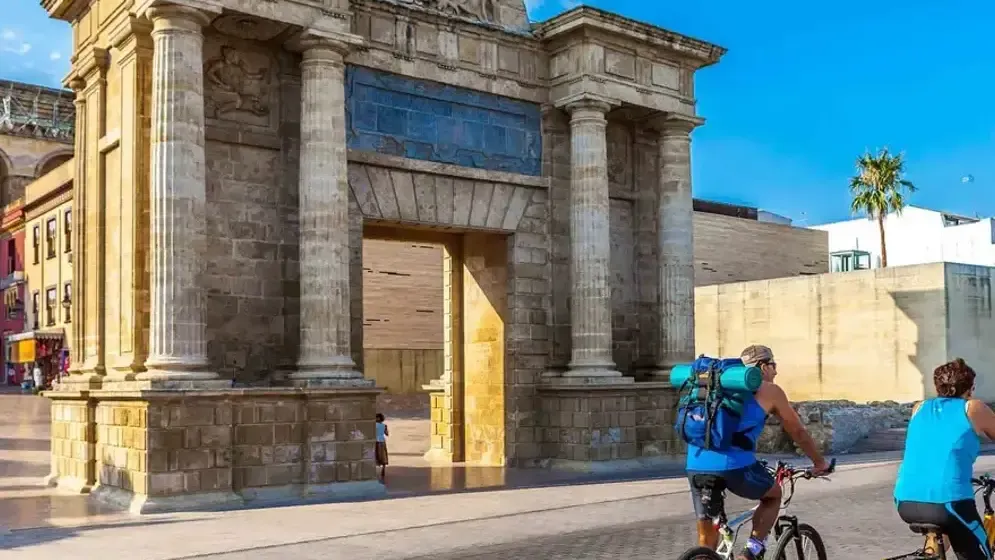
Cycling and tuk-tuk options: The guided cycling tour covers the Mezquita, the Alcázar, and the Fernandine churches in 2 hours (€29). Tuk-tuk tours run private circuits past the exterior with commentary (€45 for 1 hour).
Practical logistics
Allow 1.5 to 2 hours inside. The dress code is enforced: shoulders and knees covered. Carry a scarf or overshirt if you're arriving in summer clothes. The bell tower climb adds 30 minutes and involves narrow stairs. Your ticket includes the Episcopal Palace opposite, whose Diocesan Museum holds the cathedral's Christian art collection — a worthwhile half-hour extension.
What to combine
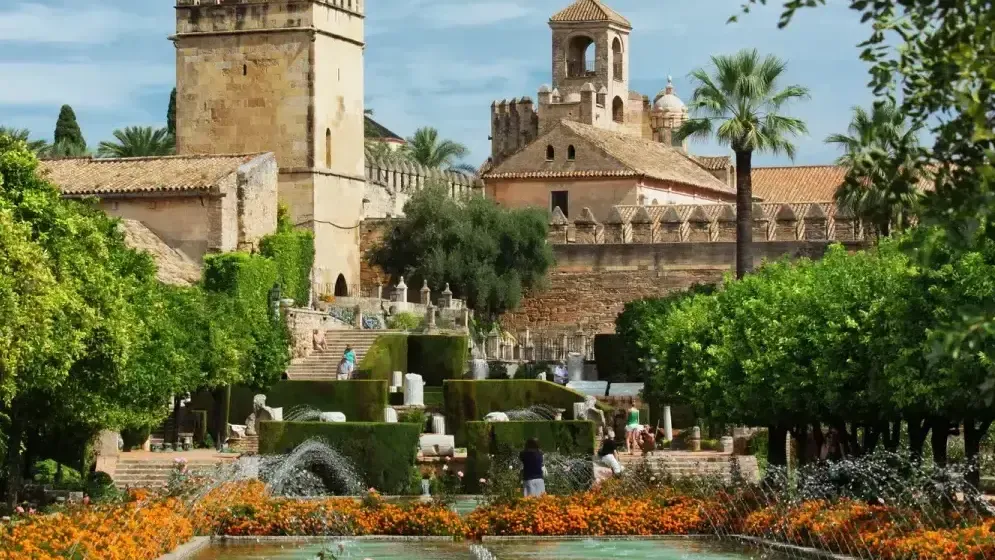
The Alcázar de los Reyes Cristianos and the Synagogue are both under 5 minutes' walk through the Judería. The Caliphal Baths — the best-preserved 10th-century Islamic hammam in Spain — are just beyond the Alcázar, usually skipped by visitors who don't look for them. Two minutes in the opposite direction, the Casa-Museo del Guadamecí Omeya is a free, unhurried introduction to the Umayyad art of gilt-embossed leather — a hidden gem that almost no one coming out of the Mezquita thinks to visit. On nearby Plaza de Maimónides, the Bullfighting Museum covers Córdoba's deep tradition in tauromaquia through bullfighter capes, swords, and portraits of celebrated local toreros. In May, the patio festival opens private courtyards a few streets away, a separate UNESCO tradition. In October, the FLORA festival installs contemporary floral art in the Orange Tree Courtyard.
During Holy Week (late March to early April), all 38 brotherhoods route their processions through the Patio de los Naranjos, baroque pasos carried shoulder-high beneath the horseshoe arches before continuing via the Puerta del Perdón onto the carrera oficial. Position yourself inside the courtyard two hours before a major brotherhood's scheduled pass. Candlelight, incense, and a 1,300-year-old archway overhead — nothing else in Spanish procession culture looks quite like this. The complete Holy Week guide has schedules and viewing positions for all 8 days.
The Mezquita is a stop on the Jewish Quarter Walk, the Moorish Architecture Tour, and the Three Cultures Route — all three give useful architectural context for what you see inside.
After the visit, Hammam Al Ándalus runs traditional Arab baths three minutes' walk away. For a drink with a direct sightline to the Mezquita tower, Balcón de Córdoba Rooftop is 20 metres from the entrance and open to non-hotel guests. If you're staying the night, Casa de las Comedias — boutique apartments in a 17th-century building on Calle Velázquez Bosco — is 140 metres from the door.
The Mezquita ranks first in our Top 10 Monuments in Córdoba and features throughout the Top 15 Highlights of Córdoba guide.