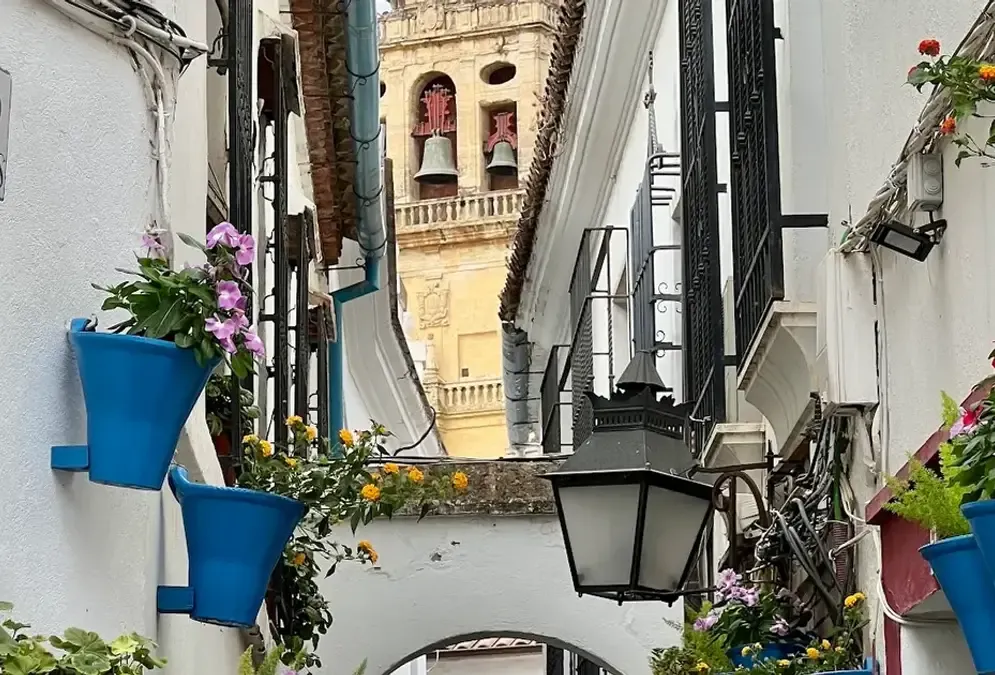
Free admission
Calleja de las Flores
Whitewashed walls and red geraniums framing the Mezquita bell tower. Córdoba's most photographed alley in the Judería. Free, open 24 hours, best before 10am.
La Judería
Explore
The Calleja de las Flores, the Plaza de la Corredera, the patios of San Basilio... The soul of Córdoba beats in its lanes.
Córdoba's squares and lanes are not scenographic backdrops but living connective tissue — the spaces where the private world of the patio meets public life. The Calleja de las Flores is perhaps the most photographed street in Andalusia: a narrow whitewashed alley whose geranium-filled balconies frame a perfect view of the Mezquita's bell tower. Yet it is only the most famous of dozens of similar lanes threading through the Judería and the old medina, many so narrow that two people cannot pass without turning sideways. The Plaza de la Corredera is Córdoba's only enclosed rectangular square — built in the 17th century on the model of the Madrid Plaza Mayor, its past as a bullfighting arena and site of Inquisition trials invisible beneath the terrace umbrellas. The Plaza de las Tendillas is the modern heart of the city, where the equestrian statue of Gonzalo Fernández de Córdoba presides over the commercial centre. Between these poles, the backstreets of the San Basilio quarter offer the purest urban experience: white walls, blue tiles, the sound of a fountain, the scent of orange blossom, and occasional glimpses through open doors into the private paradise of a patio.
Whitewashed walls and red geraniums framing the Mezquita bell tower. Córdoba's most photographed alley in the Judería. Free, open 24 hours, best before 10am.

4 hectares of inclusive playground: 30+ structures including a Mezquita-inspired climbing frame, water zone and fully accessible equipment. Free entry.
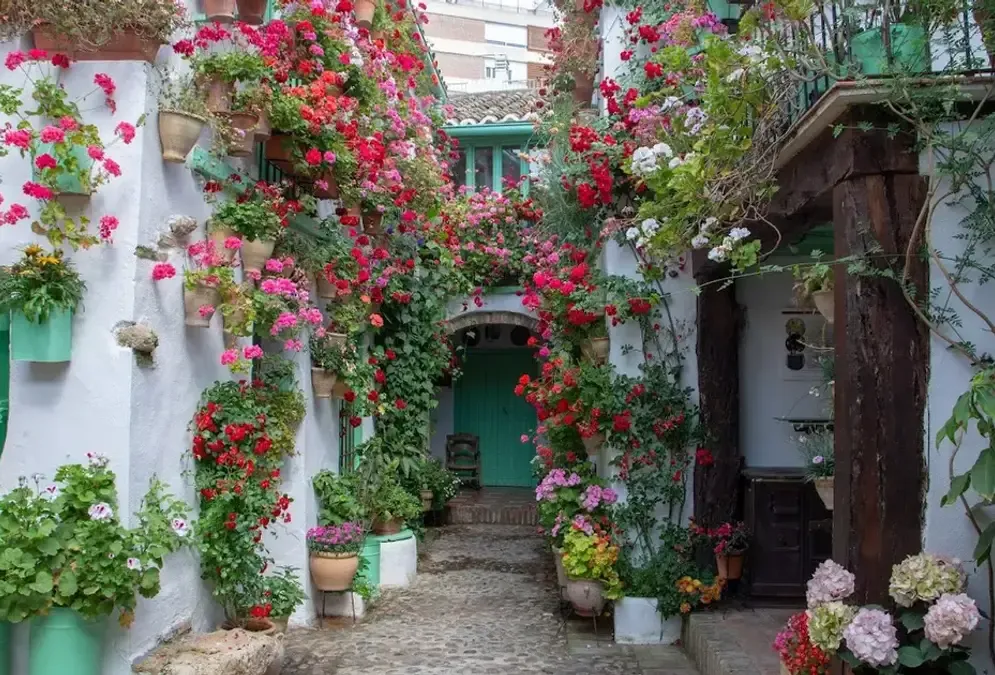
The most concentrated pocket of Córdoba's patio tradition. Flower-draped courtyards in San Basilio open year-round, free or by small donation. Best in May.
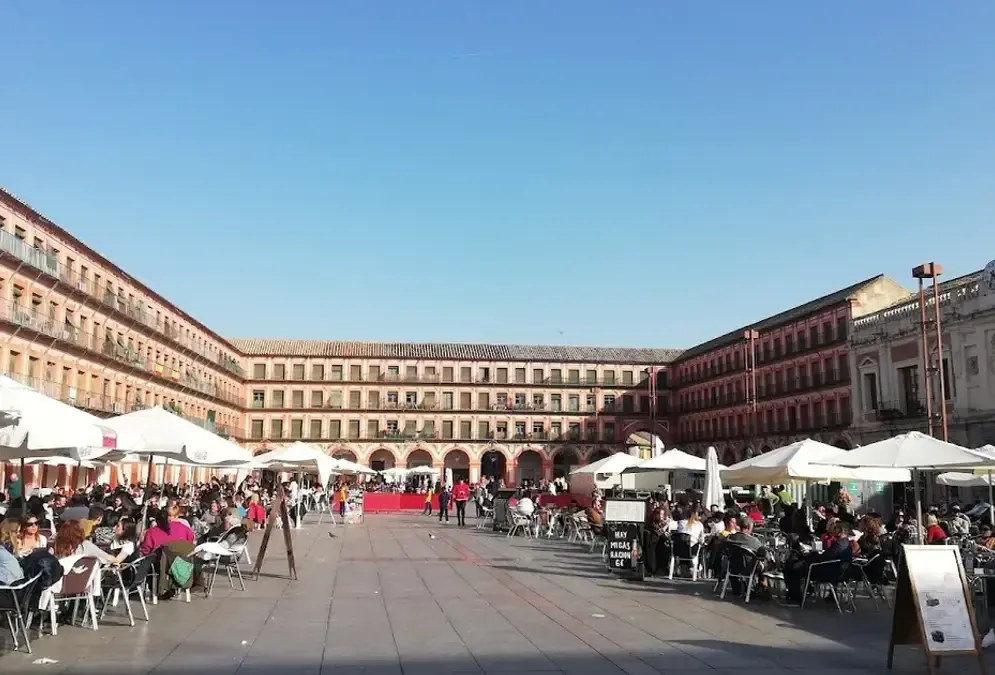
Andalusia's only Castilian arcaded square, built in 1683 over a Roman forum. Once a bullfighting ring, now lined with bar terraces and a Sunday flea market.
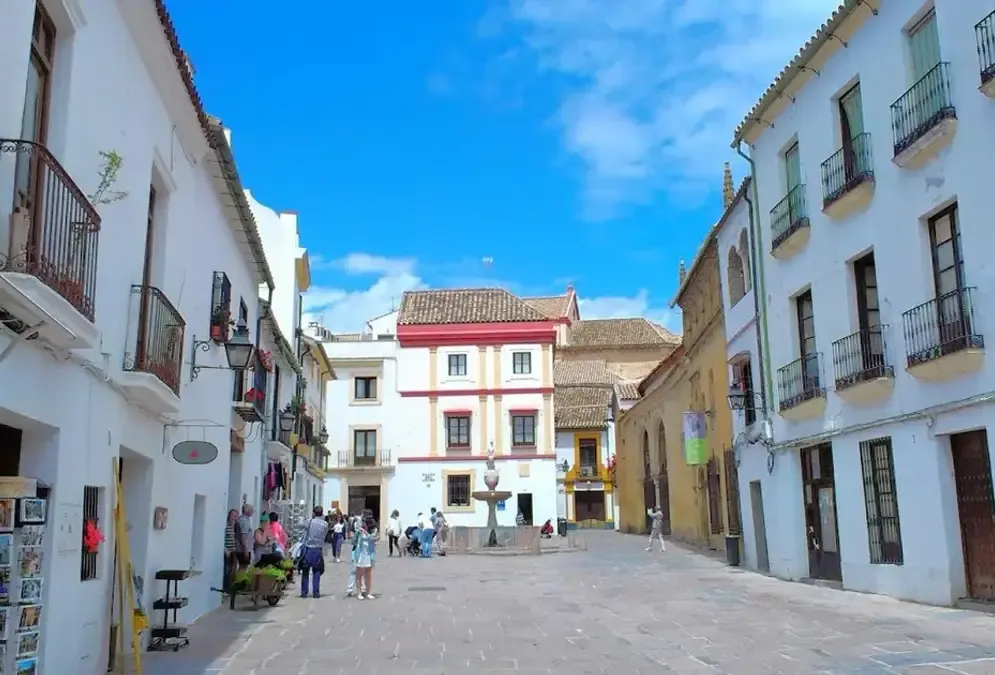
Cited by Cervantes in Don Quixote. The 1577 fountain still stands; the Fine Arts Museum, Fosforito Flamenco Centre and Julio Romero Museum all face the square.
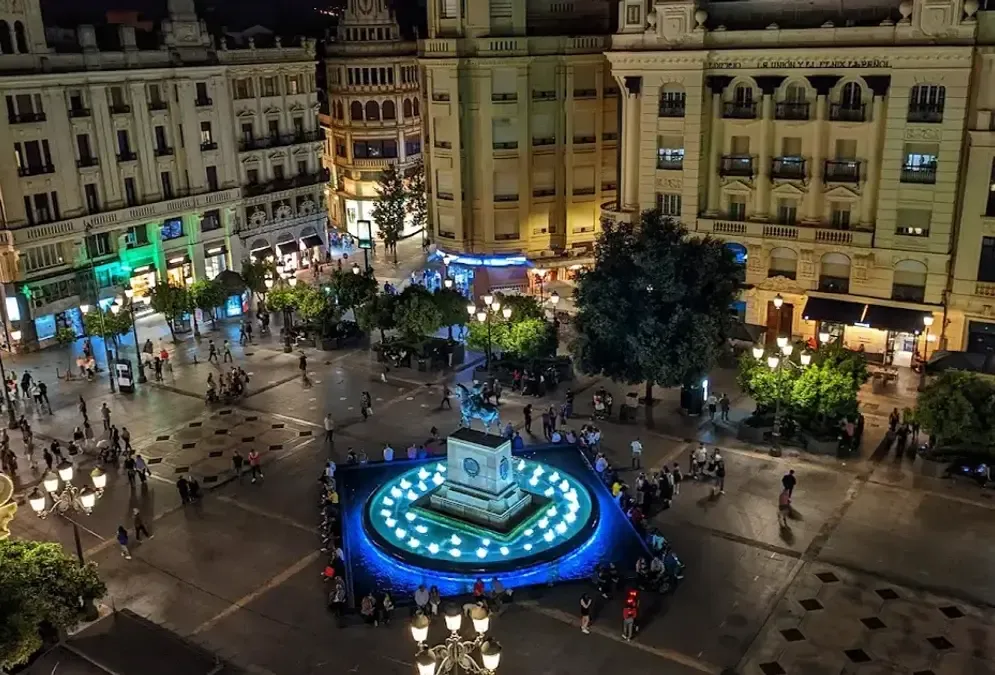
Córdoba's central square, with a clock that chimes guitar chords on the hour. Equestrian statue of El Gran Capitán, terrace cafés and the main shopping streets.
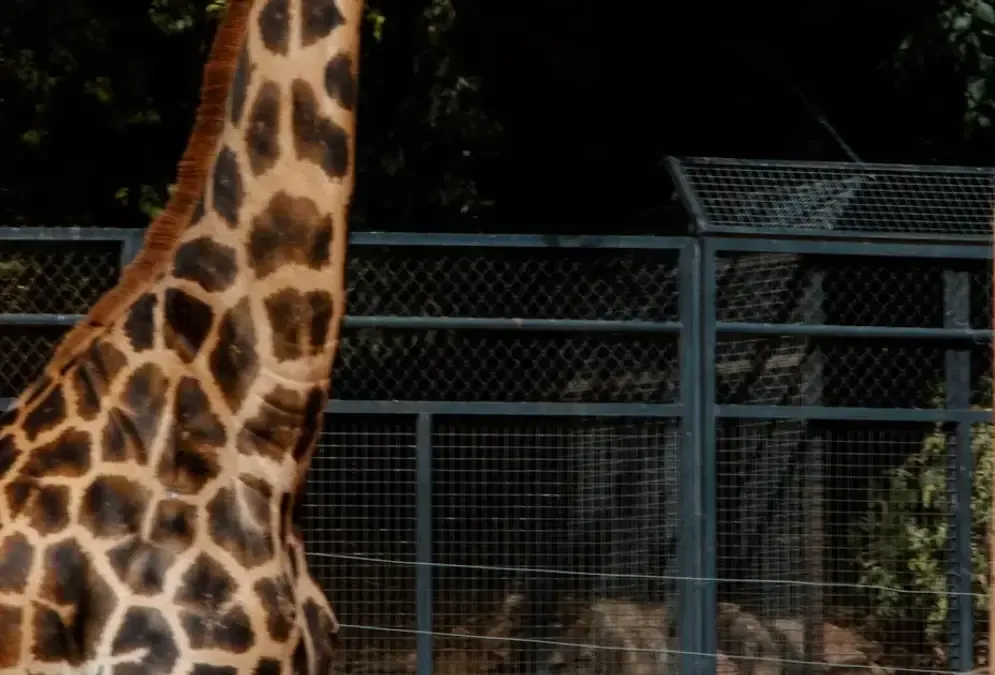
Conservation zoo with 500+ animals from 100 species, European breeding programmes, educational workshops and shaded walkways beside the Guadalquivir. From €3.
A narrow whitewashed alley in the Judería, around 150 metres from the Mezquita, famous for its flower-filled balconies and the precise view they frame of the bell tower through a gap in the roofline. The name comes from the geranium pots that line the walls from spring to late autumn. It is one of the most photographed streets in Andalusia and gets extremely crowded by mid-morning in peak season.
Before 9am, when the light is low and the alley is nearly empty. The lane is barely three metres wide at its narrowest point — by mid-morning in April to June it fills completely with visitors. Returning at dusk is also worthwhile: the Mezquita bell tower is lit from below, the crowds thin quickly after dinner, and the light on the whitewashed walls is different from midday.
The only enclosed rectangular square in Córdoba, built in the 17th century and modelled loosely on Madrid's Plaza Mayor. Its colonnaded facades have housed bullfighting arenas, Inquisition trials, and public executions — none of which is visible today under the café umbrellas and morning market stalls. It functions as the city's working square rather than its showpiece, which makes it less visited but more authentic.
Yes. All streets, lanes and public squares — including the Calleja de las Flores, Plaza de la Corredera, Plaza de las Tendillas and the San Basilio quarter — are public space, free to enter at any hour. The Patio del Potro (behind the Museum of Fine Arts) charges a small admission to enter the courtyard building. Most patios visible through open doors are private residences and cannot be entered.
From the Mezquita, walk five minutes north through the Judería lanes to the Calleja de las Flores, then east along Calle Deanes to the Potro square near the museum. Continue north past the Alcázar Viejo to reach Plaza de la Corredera, the city's baroque centrepiece. The full circuit covers around 2km and takes 45 minutes at a relaxed pace without entering any monument. The backstreets of the San Basilio quarter, just south of the Corredera, are worth a detour.
Enjoying Explore Córdoba? Add us as a preferred source on Google.