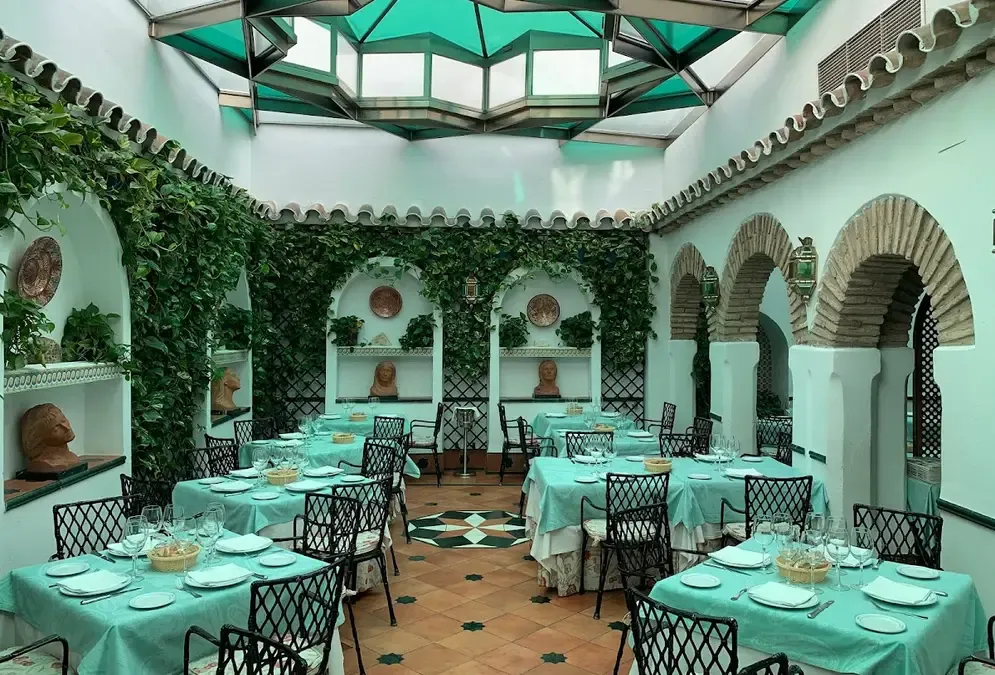
The Alcázar de los Reyes Cristianos sits at the southwestern edge of the Juderia, where the old city meets the Guadalquivir riverbank. After an hour among the Roman mosaics and terraced gardens, the Campo Santo de los Mártires square outside the exit has a handful of terrace tables — pleasant for a beer but not serious cooking. Serious cooking is two blocks north. El Churrasco has been working the charcoal grill on Calle Romero since 1975 and remains the area's best kitchen for traditional Cordoban meat dishes. Casa Mazal serves Sephardic-influenced dishes — lamb with dried fruit, aubergine with honey — that make historical sense in this quarter. Budget 20–35€ per person with wine; a menú del día at lunch drops that to 12–15€ at the more practical tables nearby.
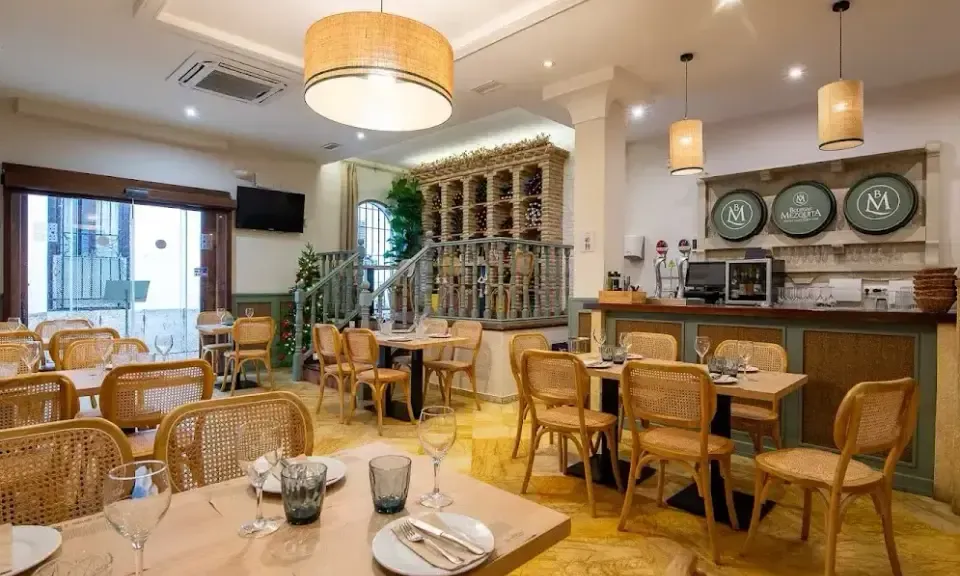
The dining scene immediately surrounding the Alcázar splits cleanly into two registers. The terraces on Calle Caballerizas Reales and around the Puerta de Sevilla are built for foot traffic: laminated photo menus, English-language boards listing the "dish of the day", and staff stationed at the door to intercept passersby. These places are not necessarily bad, but they are priced for people who are not coming back. Walk one or two streets north into the medieval lanes and the picture changes: handwritten chalk specials, a bar counter with locals eating standing up, wine sold by the glass from unlabelled bottles of local Montilla-Moriles. Bodegas Mezquita on Calle Céspedes straddles both worlds -- reliable Cordoban tapas at fair prices, enough local clientele to keep the kitchen honest. The rule of thumb: if the tablecloths are paper and the olive oil comes in a ceramic jug, you are in the right place.
Practically speaking, El Churrasco is an 8-minute walk from the Alcázar's main exit on Calle Caballerizas Reales -- north through the Puerta de Almodovar arch and straight up Calle Romero. Taberna Almodovar is slightly closer at 6 minutes, and its weekday menú del día works well for a lighter post-visit lunch when you want to sit down without committing to a full afternoon. For something quicker, salmorejo and a plate of fried aubergine at any of the standing bars on Calle Céspedes costs under 10€ and takes 30 minutes. If you are visiting in April, May, or June -- the busiest months -- book a dinner table at El Churrasco or Casa Mazal at least 48 hours ahead. Lunch walk-ins are usually possible before 14:00, after which the dining rooms fill and the wait stretches past an hour.